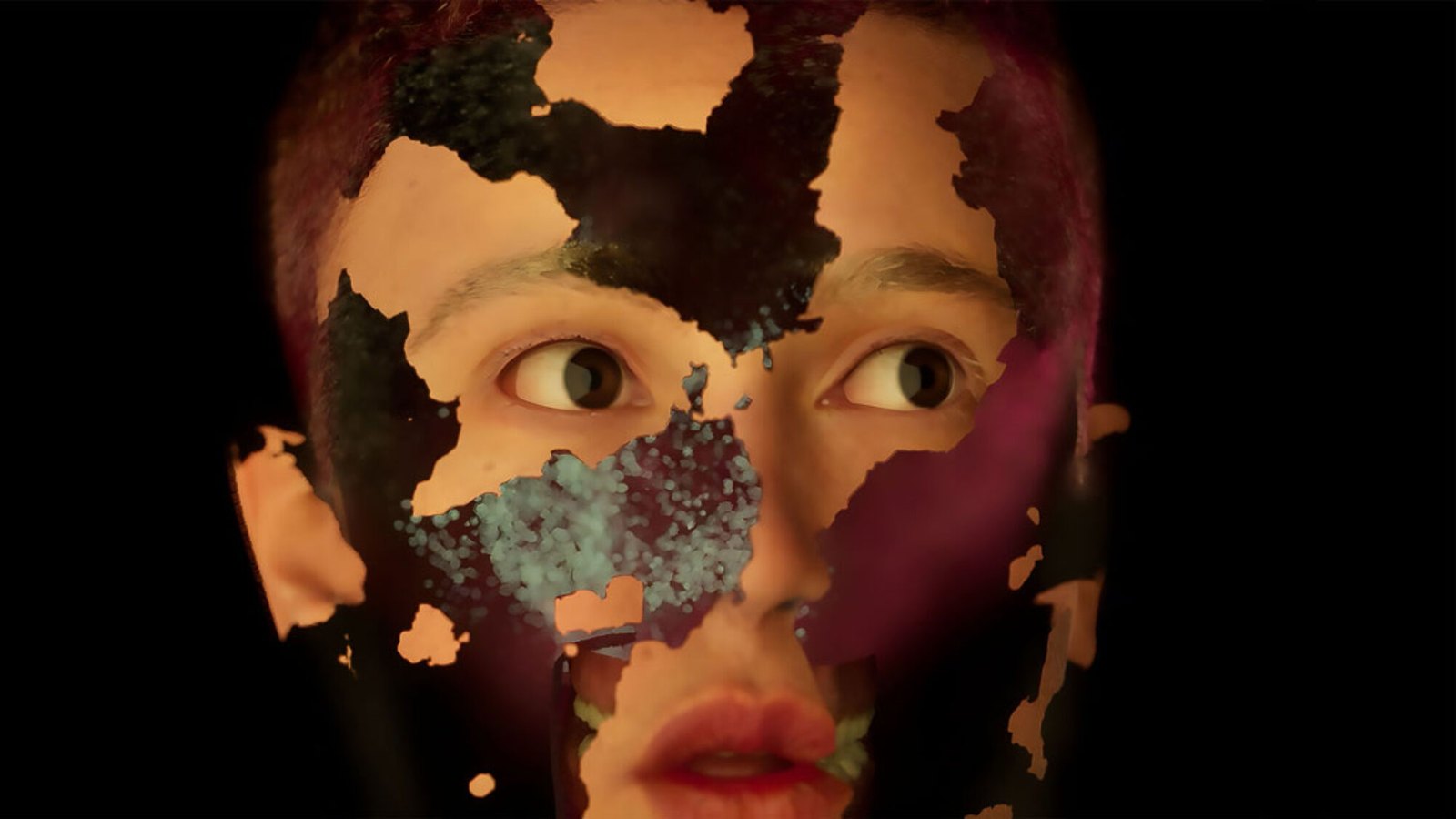
Aargauer Kunsthaus, Aarau · 26 September 2026 to 10 January 2027 · with HEK Basel · curated by Katharina Ammann
In Aarau the question comes before the works. “Artificial Creativity”, the exhibition the Aargauer Kunsthaus has built together with the Haus der Elektronischen Künste (HEK) in Basel, starts from a spare definition: creativity is an attribution. An outcome appears creative when it seems both new and relevant, and it is still people, institutions, critics and the public who decide that. From this the curator Katharina Ammann draws the line of the exhibition: artificial intelligence enters a web of people, data, technology and values, and responsibility stays with those who design, train and exhibit the systems.
Fourteen positions, three chapters: creativity as attribution, the way reality emerges, the presence of an apparent other. The first chapter is the sharpest. Botto generates images every week; a community votes on them, some are sold, and the proceeds fund the next cycle. The finished work exists only after the collective judgement. Tobias Gutmann’s Sai Bot is trained on the artist’s drawings: the signature remains recognisable, while the hand that traces it changes. In DIGITAL FRAGMENTS Robi Voigt reshuffles the public-domain images in the museum’s collection, and the exhibition notes place the decisive point in the choice of dataset and parameters.
Further on, the route moves to the body and the voice. Holly Herndon and Mat Dryhurst’s The Oratory merges real voices into a choir in real time, through the Choral Diffusion model. In Hochschuh & Donovan’s Interconnected the visitors’ gestures and the behaviour of a robotic swarm influence each other. In a reflection room two chatbots, Utobot and Dystobot, debate with each other and with whoever walks in; in the basement a Test Lab lets visitors try the tools.
The thesis holds, and its most fertile point is the one the exhibition indicates without developing it all the way. If creativity is attributed, what matters is who sets the conditions of the attribution. In Botto the voting rules, the rhythm and the economic cycle are choices; in Voigt, so are the perimeter of the collection and the parameters; in The Oratory, the decision about which voices enter the choir. These are decisions taken before the outcome, and they draw the field in which the outcome will appear.
In an interview with SRF, Ammann points out that behind an artificial intelligence there is always a person, and that the direction of these paths remains open. Aarau brings into focus the judgement that comes after the image. The rules that precede it deserve the same attention: who writes the rules of the system, and whether that writing is already, in its own right, the work.
ART_ifex Editorial Team