That's a Revolution
and we are no longer the only players in the momentous changes we are witnessing, but rather a part in a continuous flow of relationships.
At the heart of these emerging new ecosystems, we no longer find just humans, but a complex network of interactions between humans, artificial intelligences, and machines.
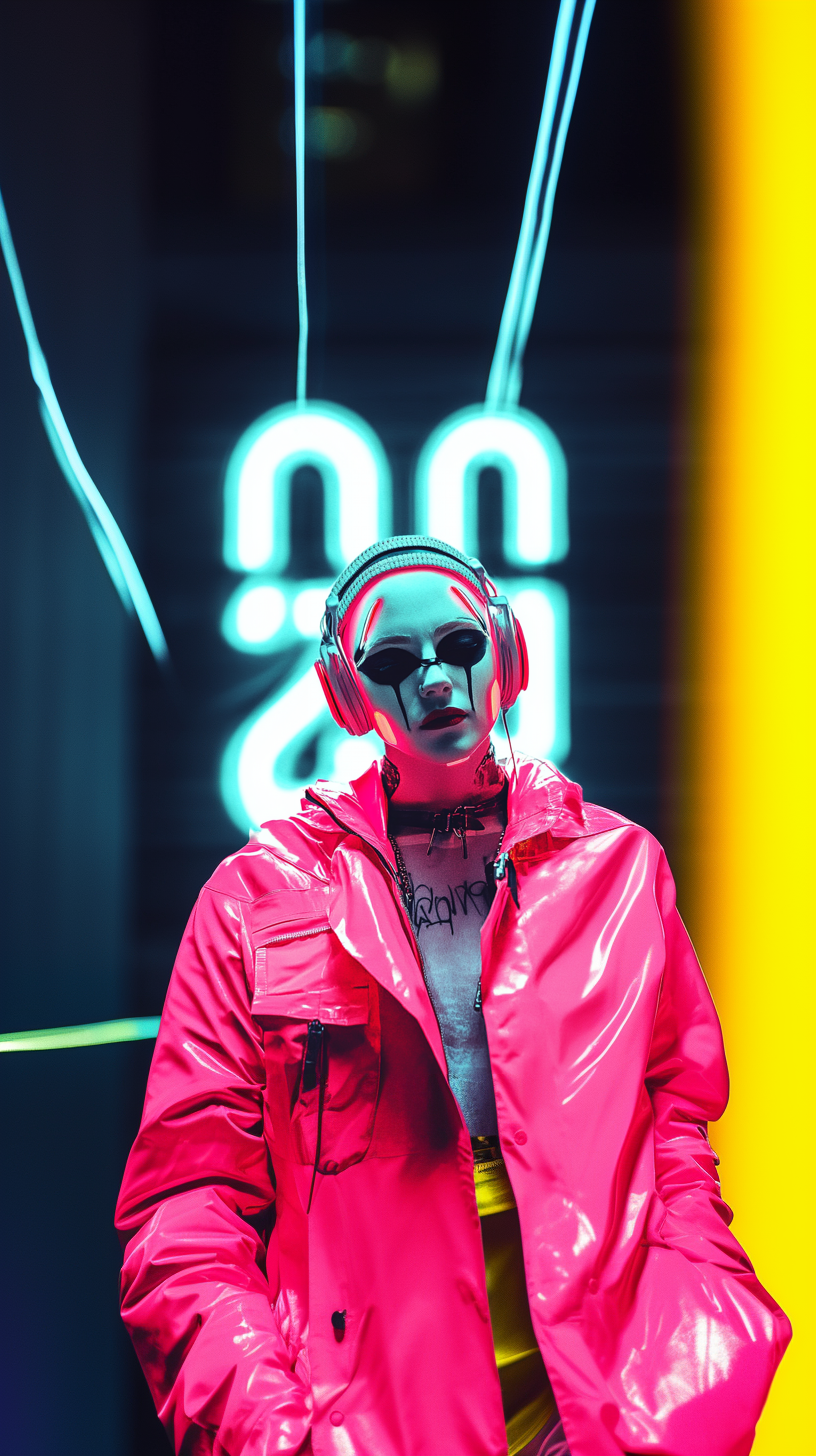
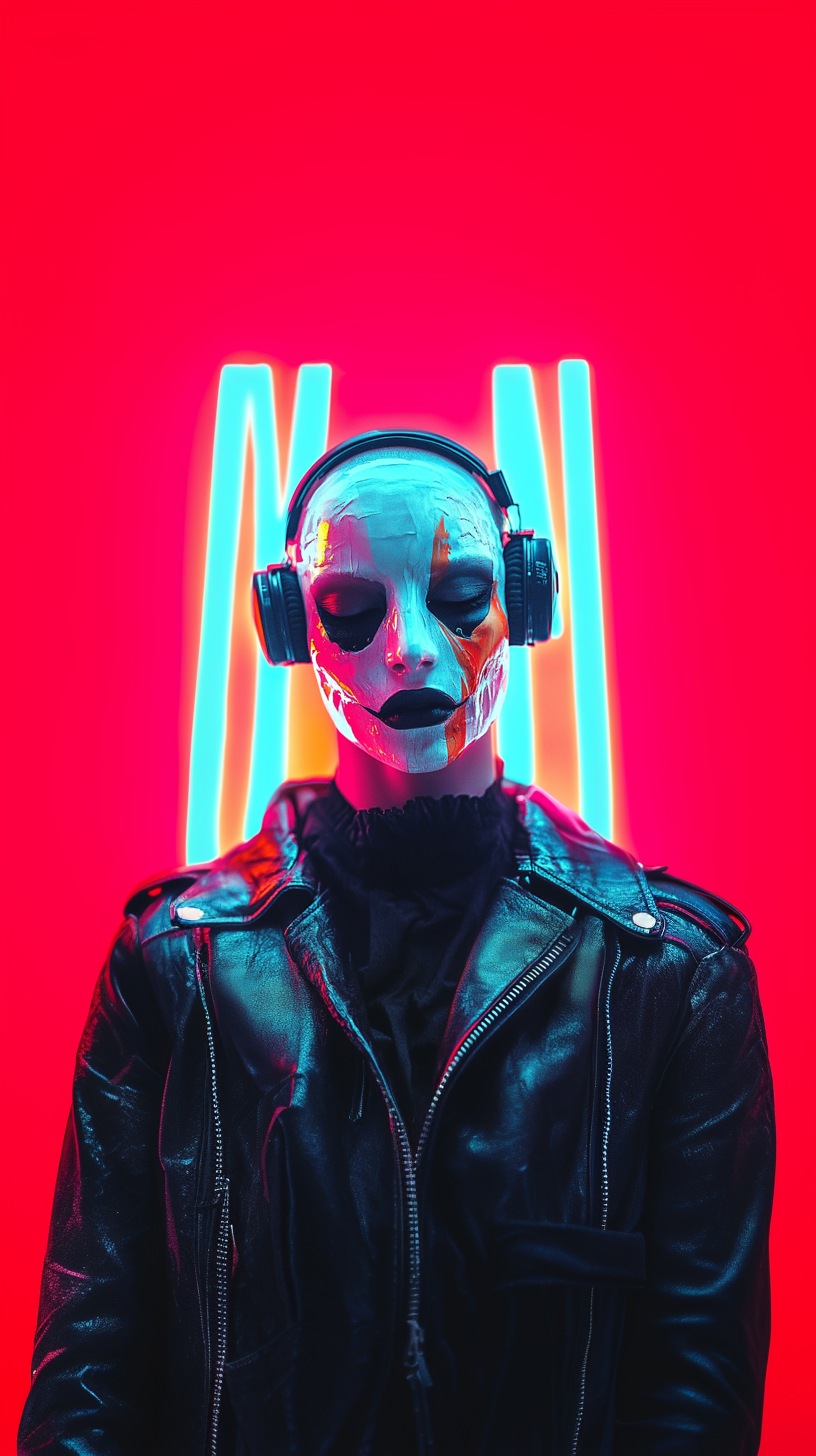
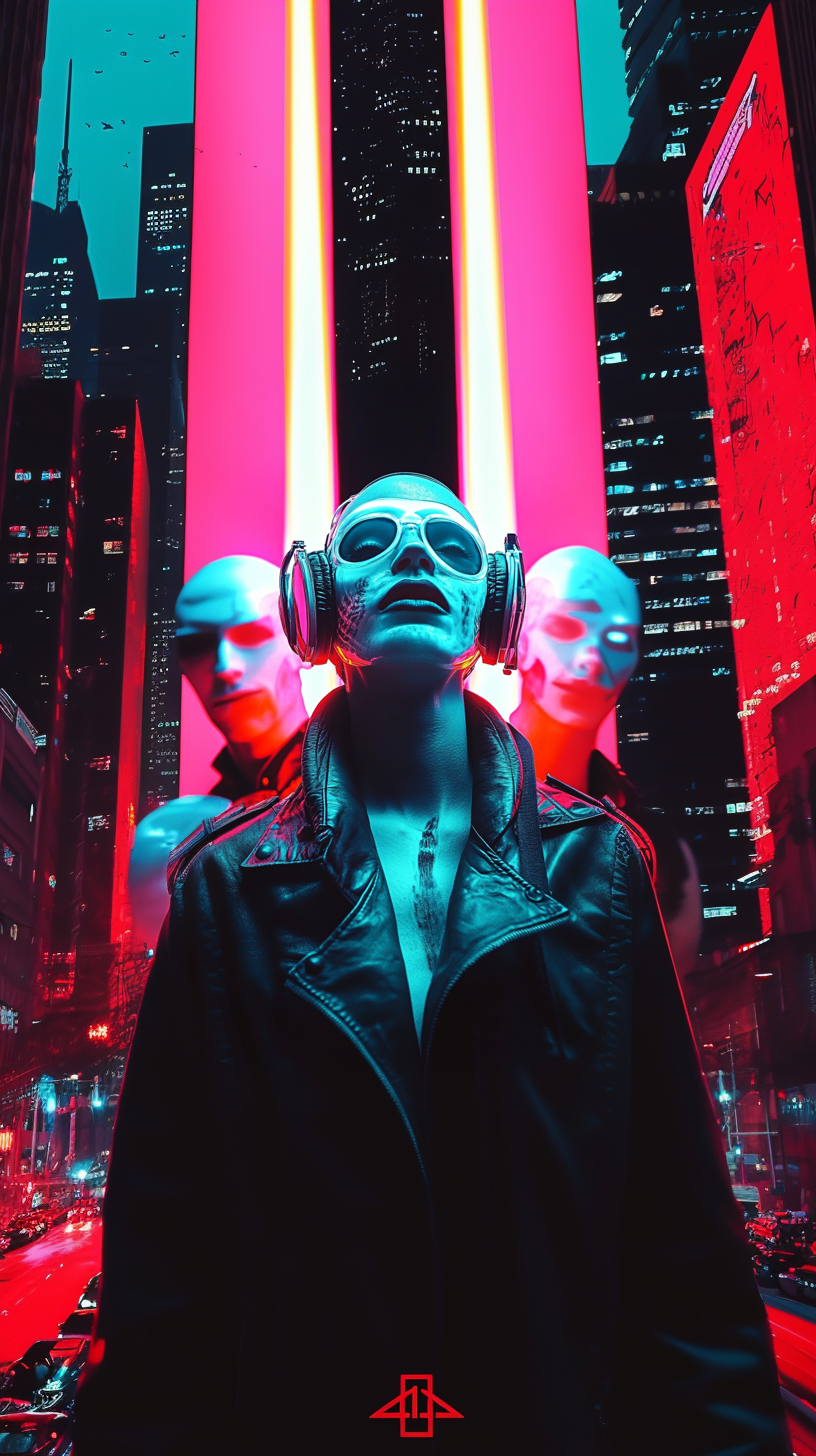
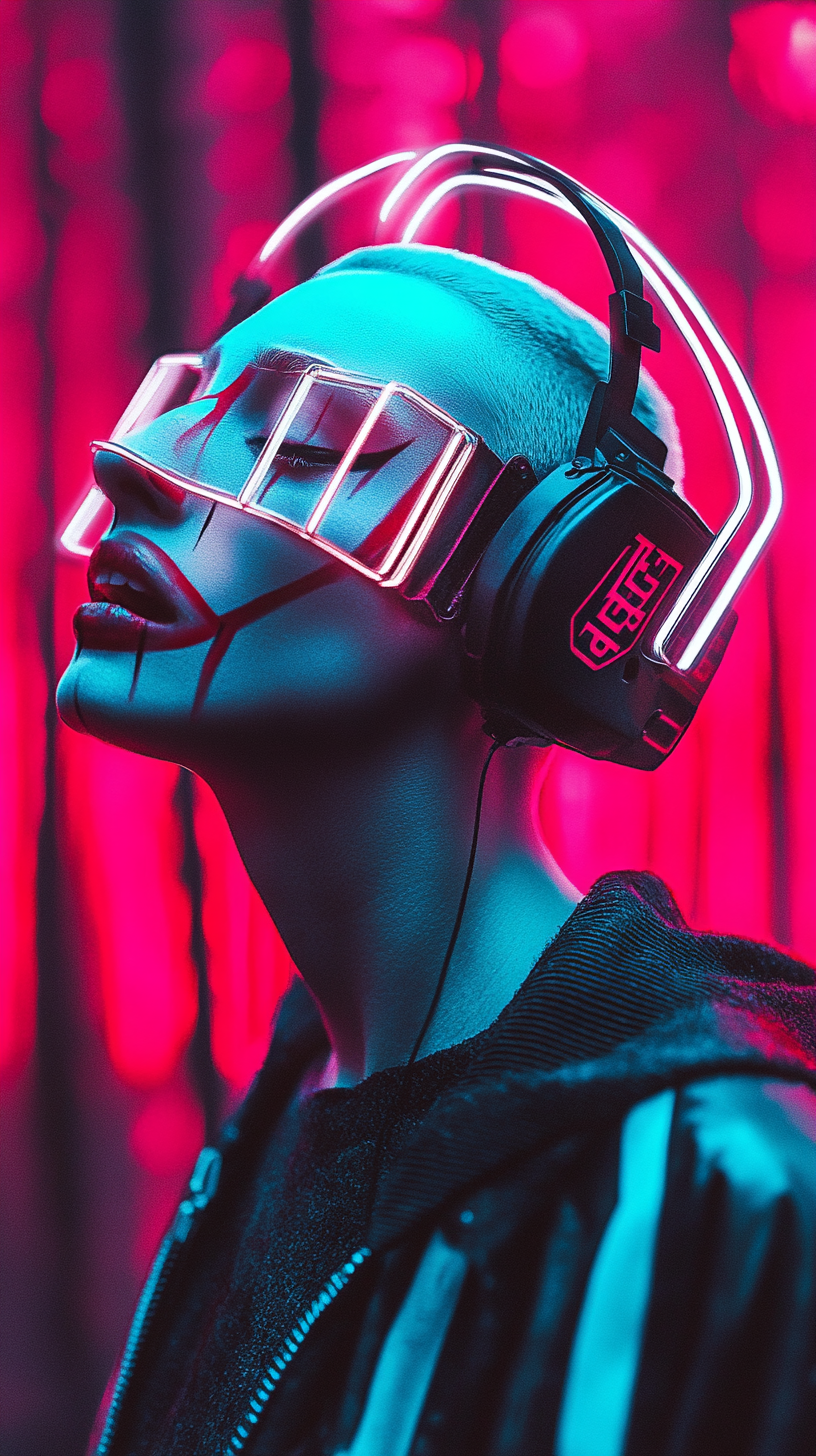
This transition is pushing us to reconsider our way of interacting with the world and, more fundamentally, how we perceive ourselves. We are no longer the only entities capable of acting freely, but we become elements of a COLLABORATIVE SYSTEM. Through interaction with these intelligent ecosystems, we can make significant contributions, especially in creative and artistic fields.
In this scenario, artificial intelligence and Extended Reailty are not just a tool, but a partner in the creative process, opening up new avenues for artistic expression and innovative thinking. Machines are not just executors of tasks, but active participants that can inspire and be inspired, in a continuous dialogue between humanity and technology.
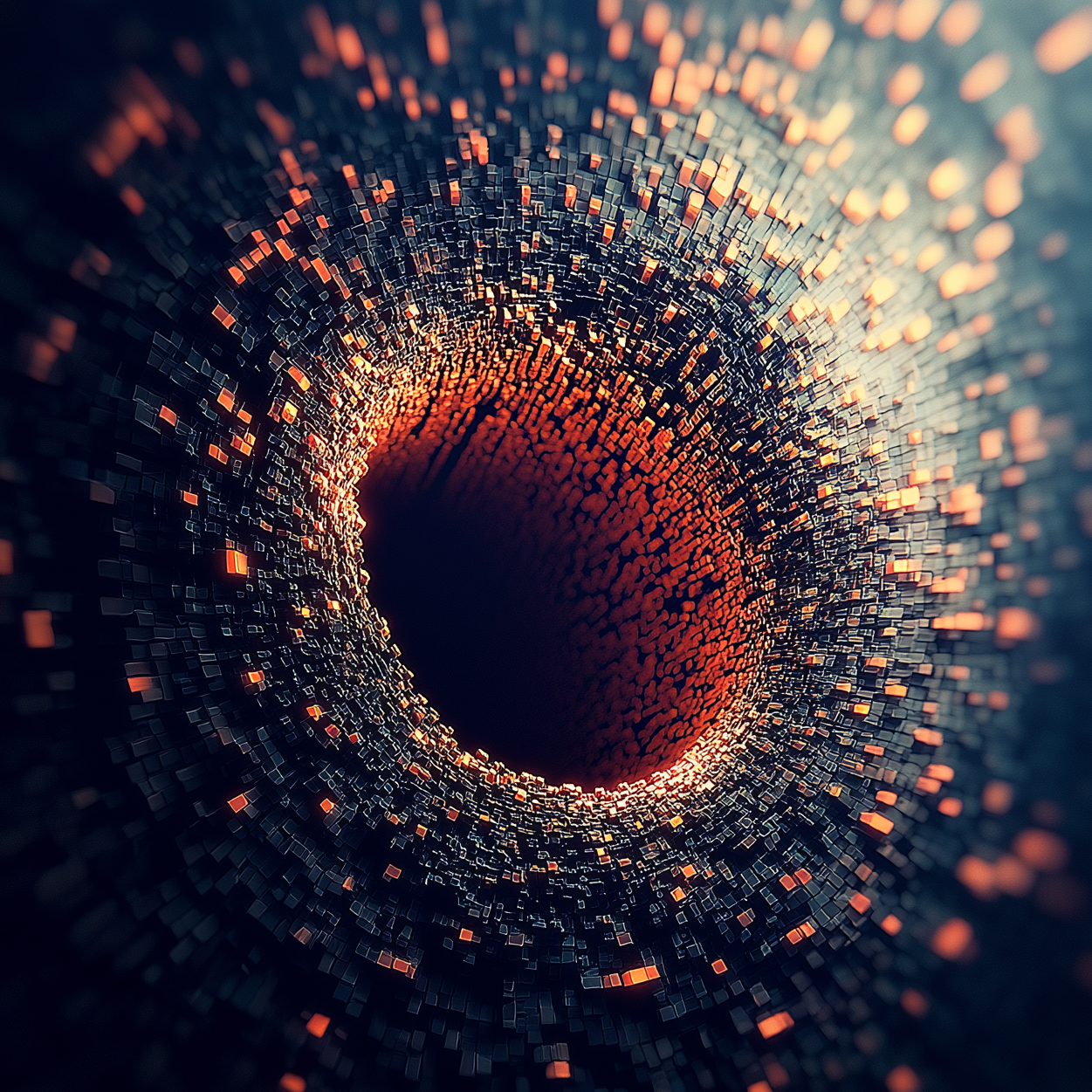
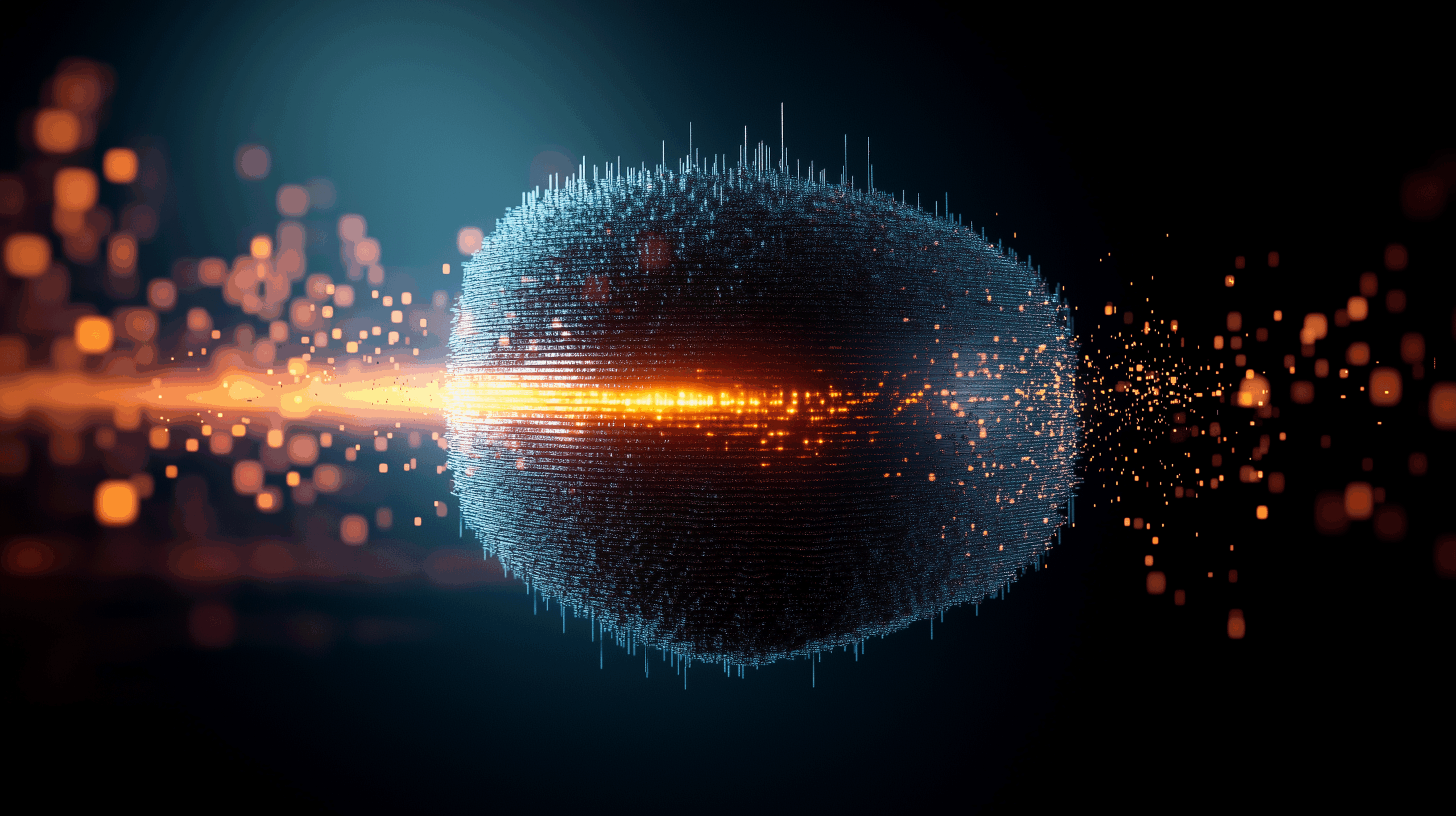
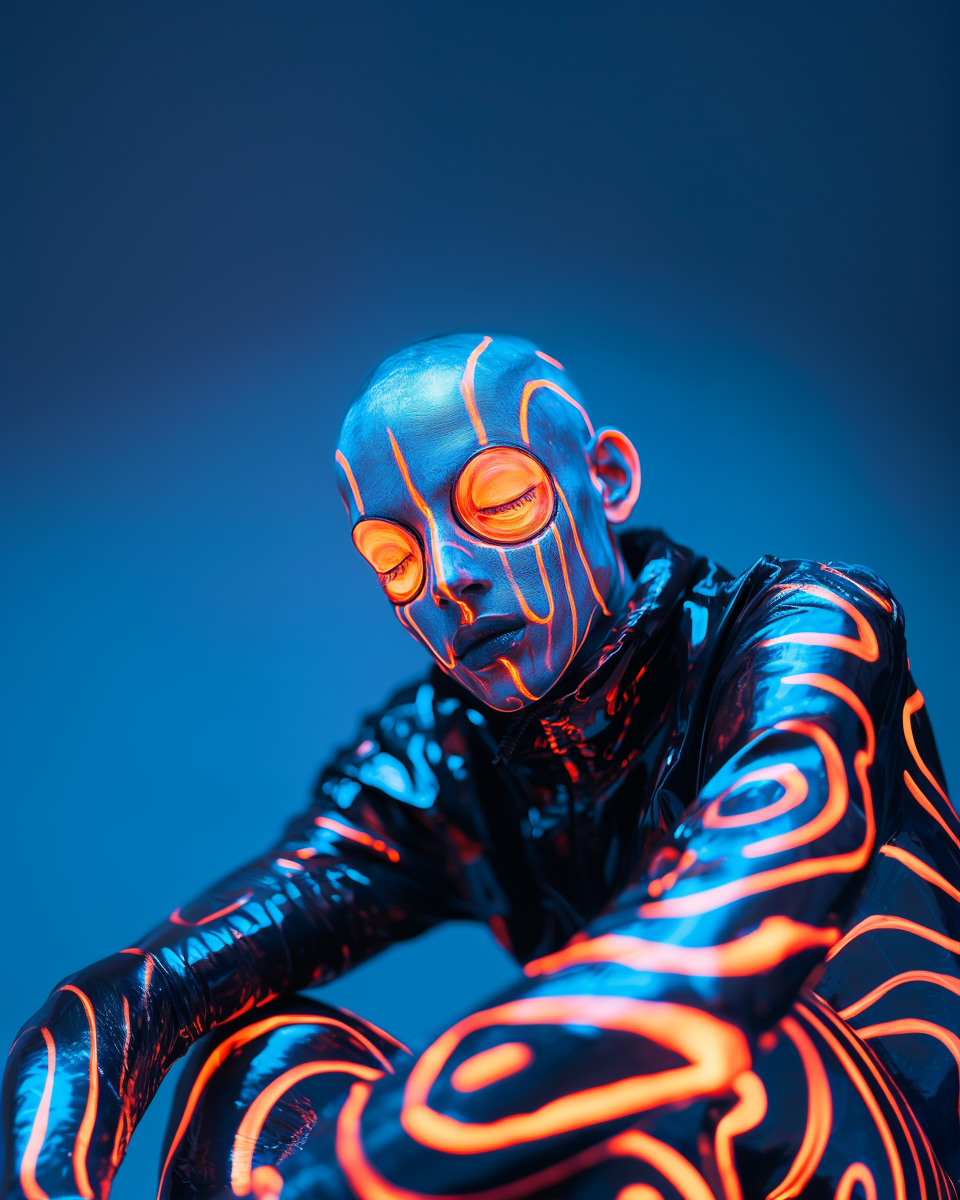
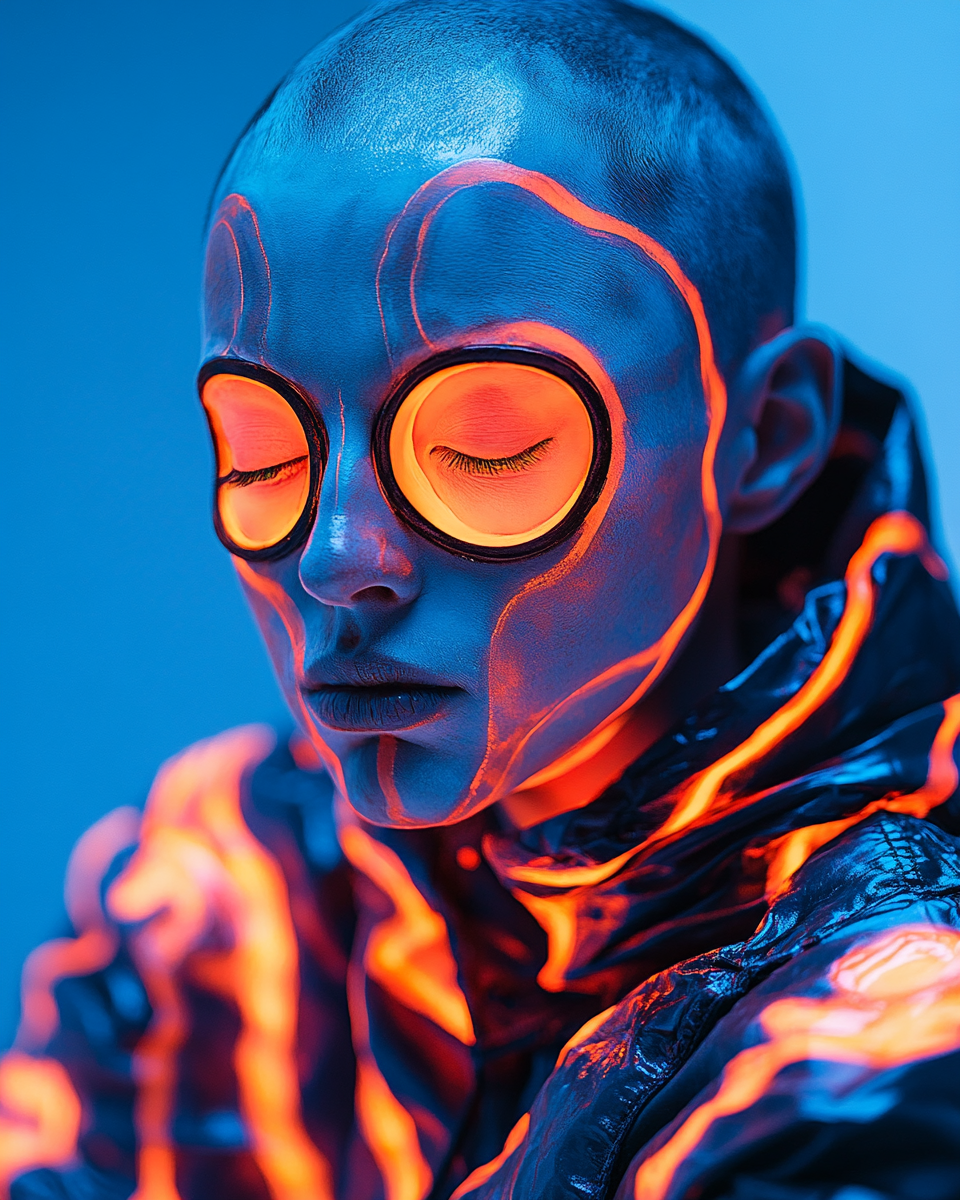
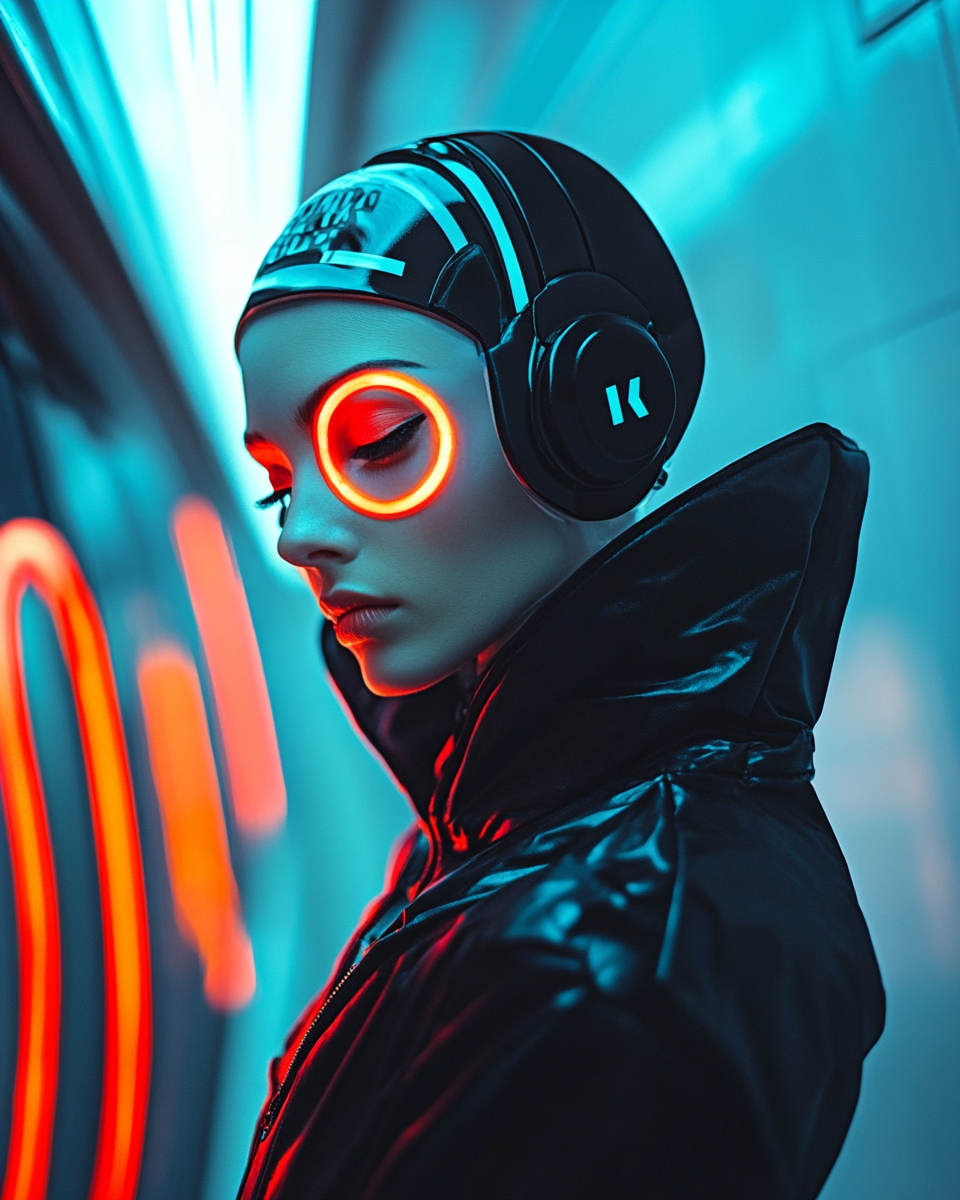
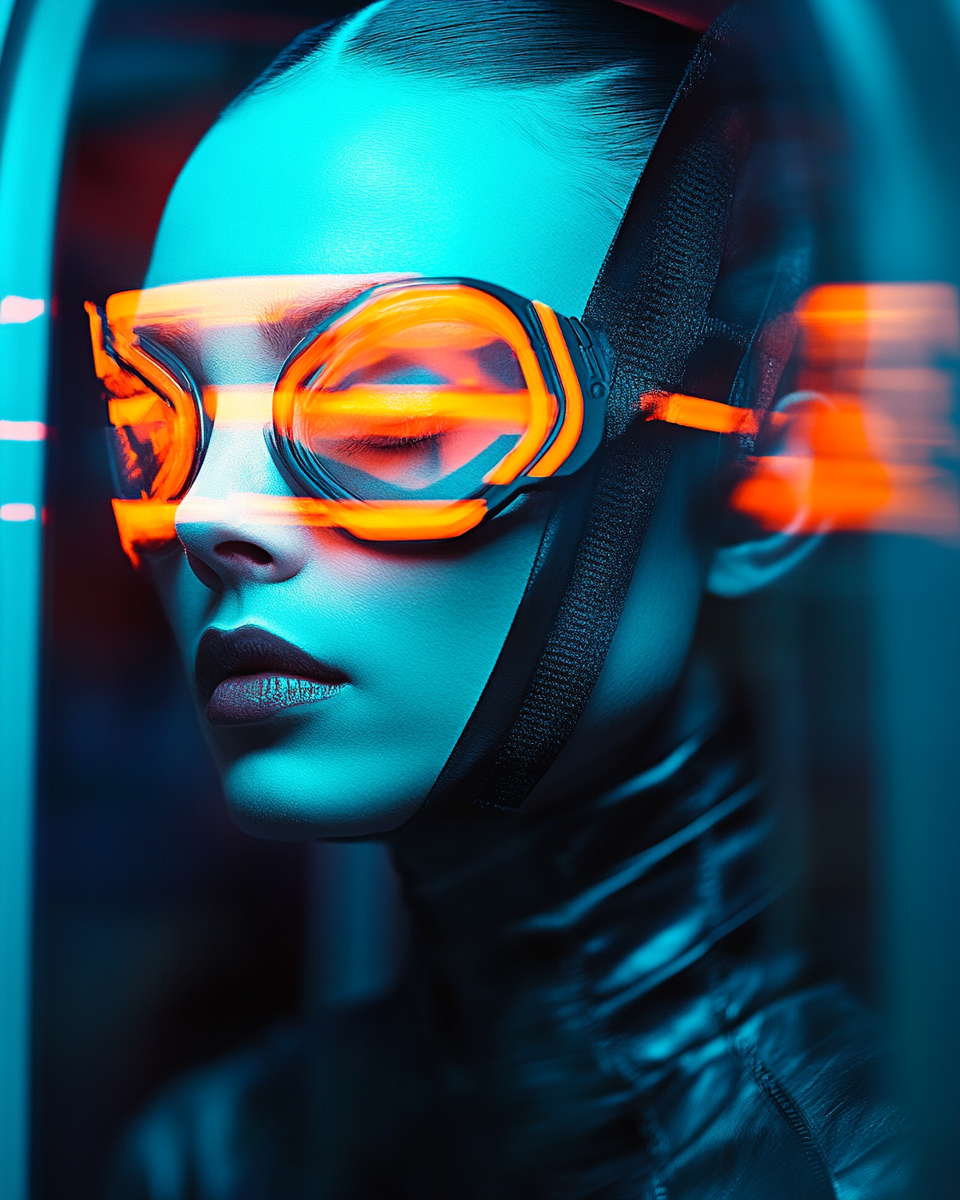
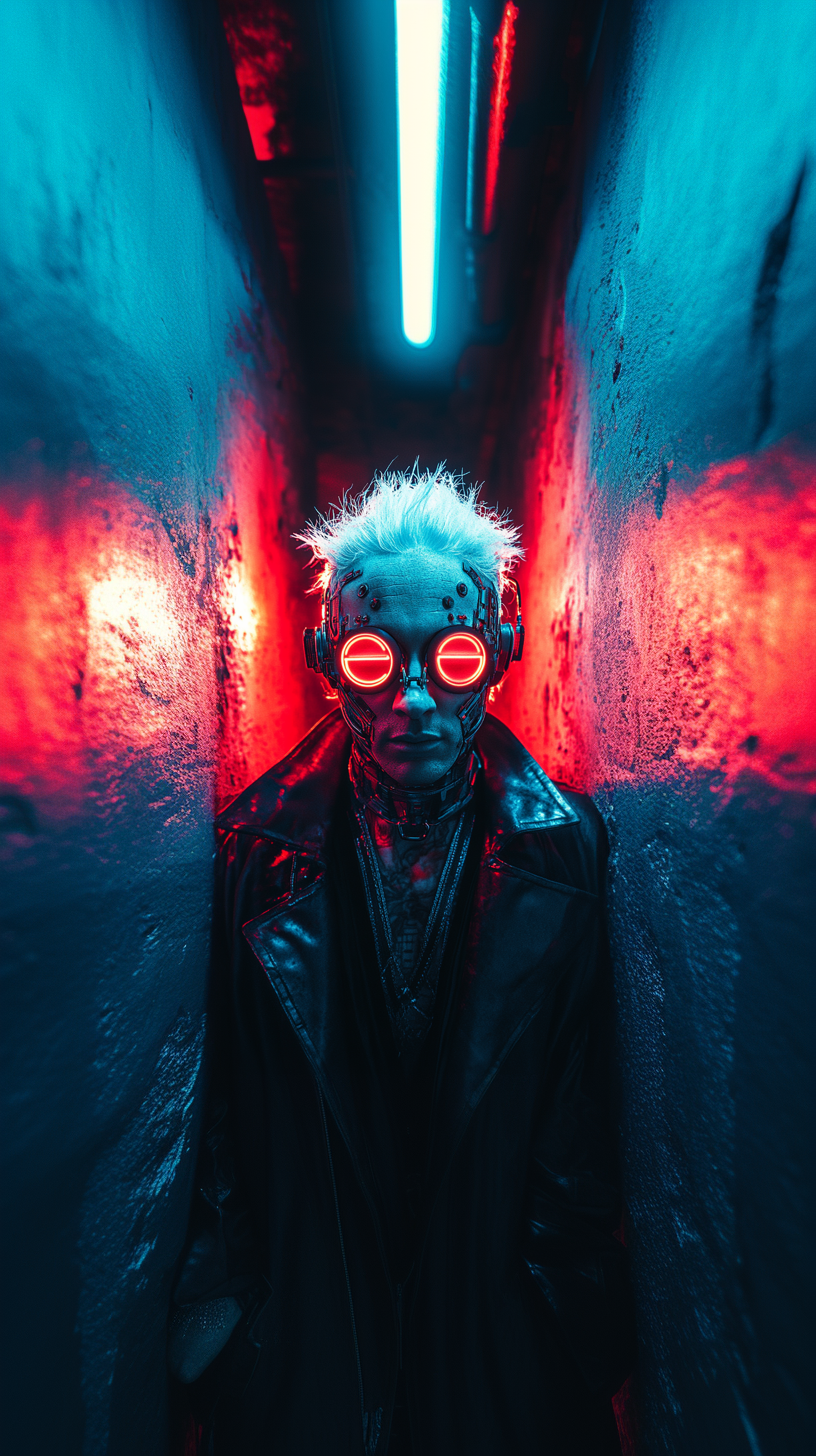
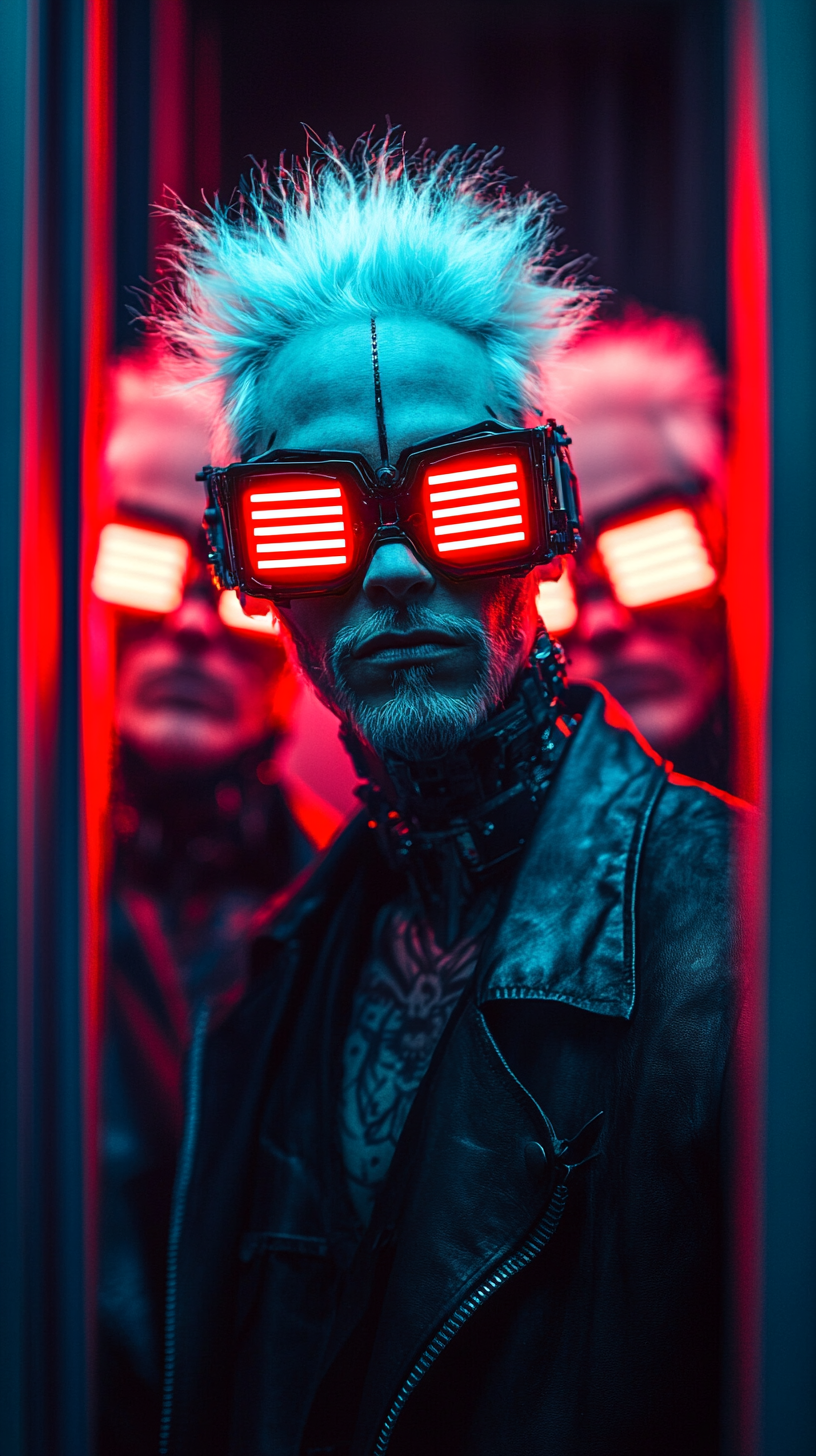
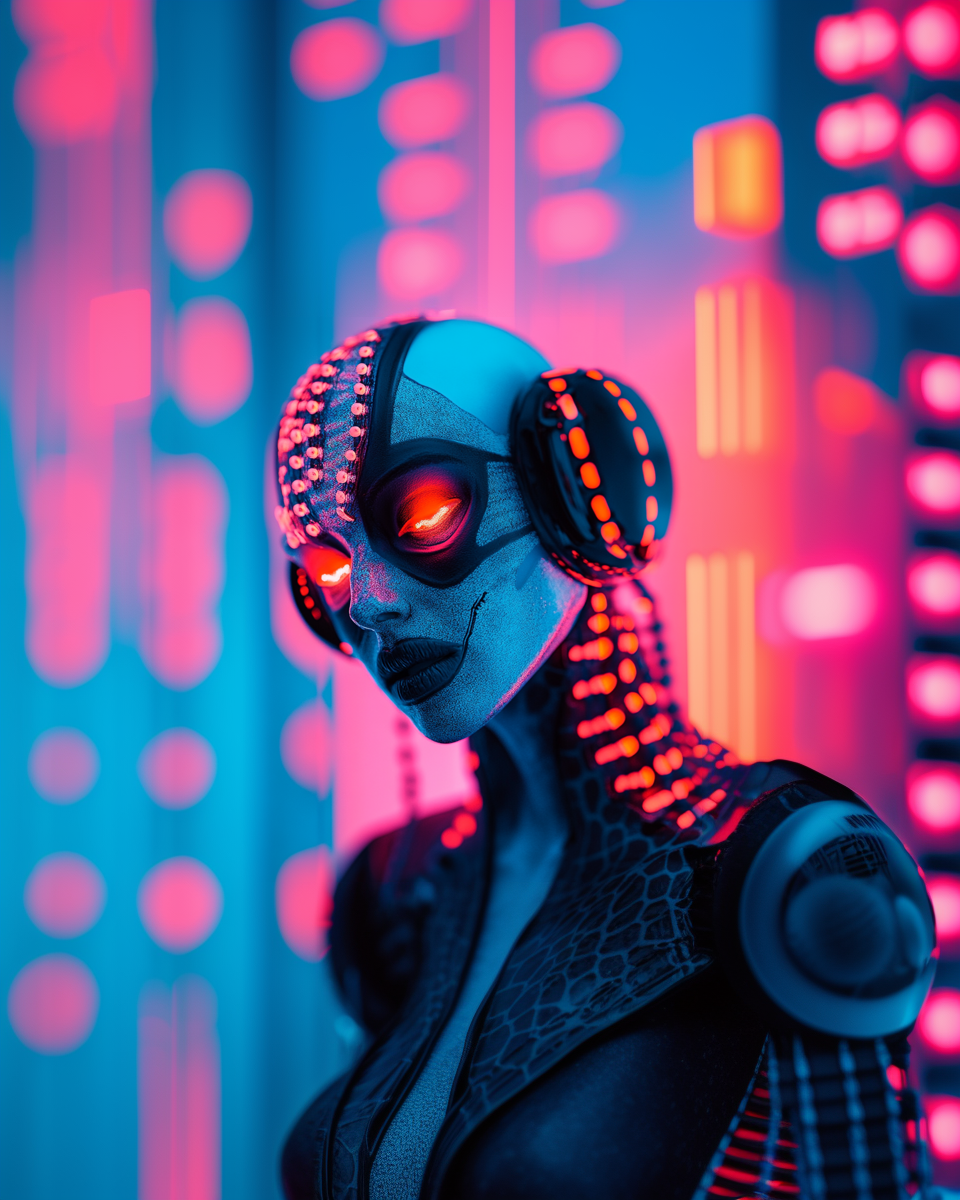
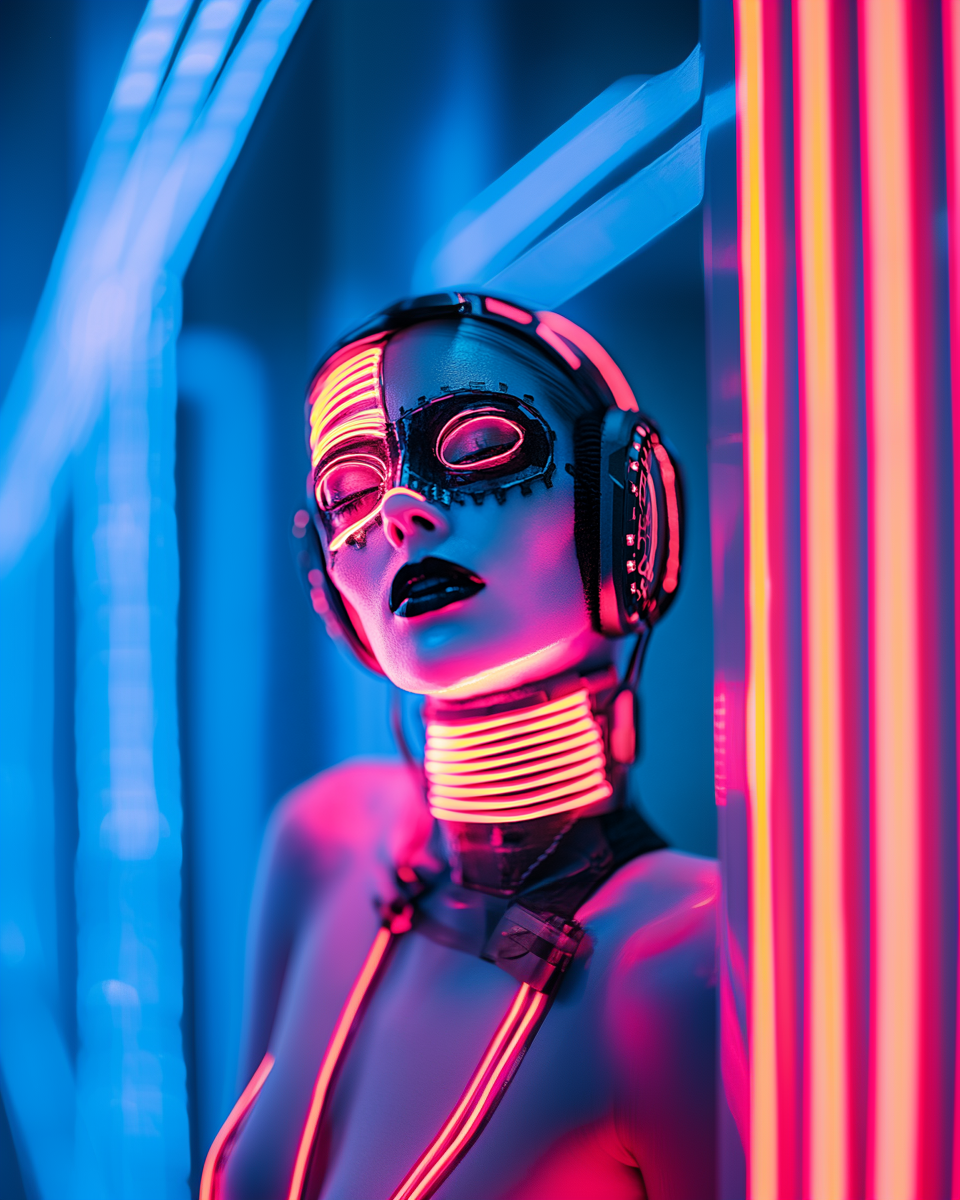
This image is part of the "S Y M B I O G E N E S I S C O L L E C T I O N" around the symbiosis of human/ai
REAL-TIME GENERATIVE WORK
MILAN · 2026
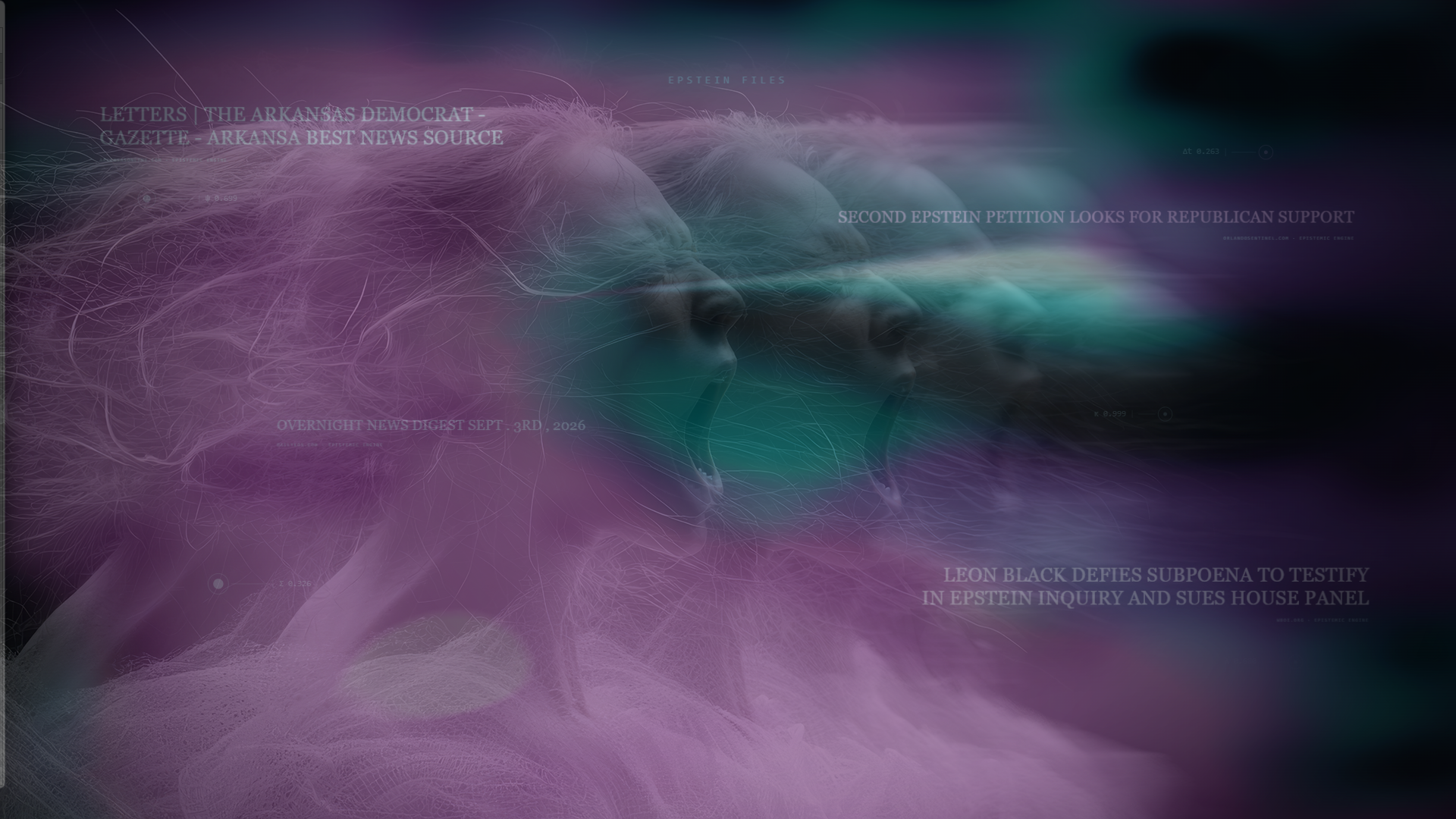
The Deferred State. Truth takes shape as a field in continuous reorganisation.
Field of Truth · The Deferred State is a real-time generative audiovisual system built around the unstable condition of contemporary information. The work continuously observes different fields of international news, identifying convergences, contradictions, disputed areas and variations in the reliability of available sources. These relations are translated into image, language, movement and sound, producing a visual field that is never definitive. At its centre, the Plausible Nucleus generates a provisional synthesis from the evidence available at that precise moment, while uncertainty and unresolved information remain structurally visible. Every state is deferred: another source, another event or another contradiction can reorganise the entire configuration. Truth therefore appears not as a fixed object, but as a continuously negotiated condition.
REAL-TIME GENERATIVE WORK
AMALFI COAST · 2026
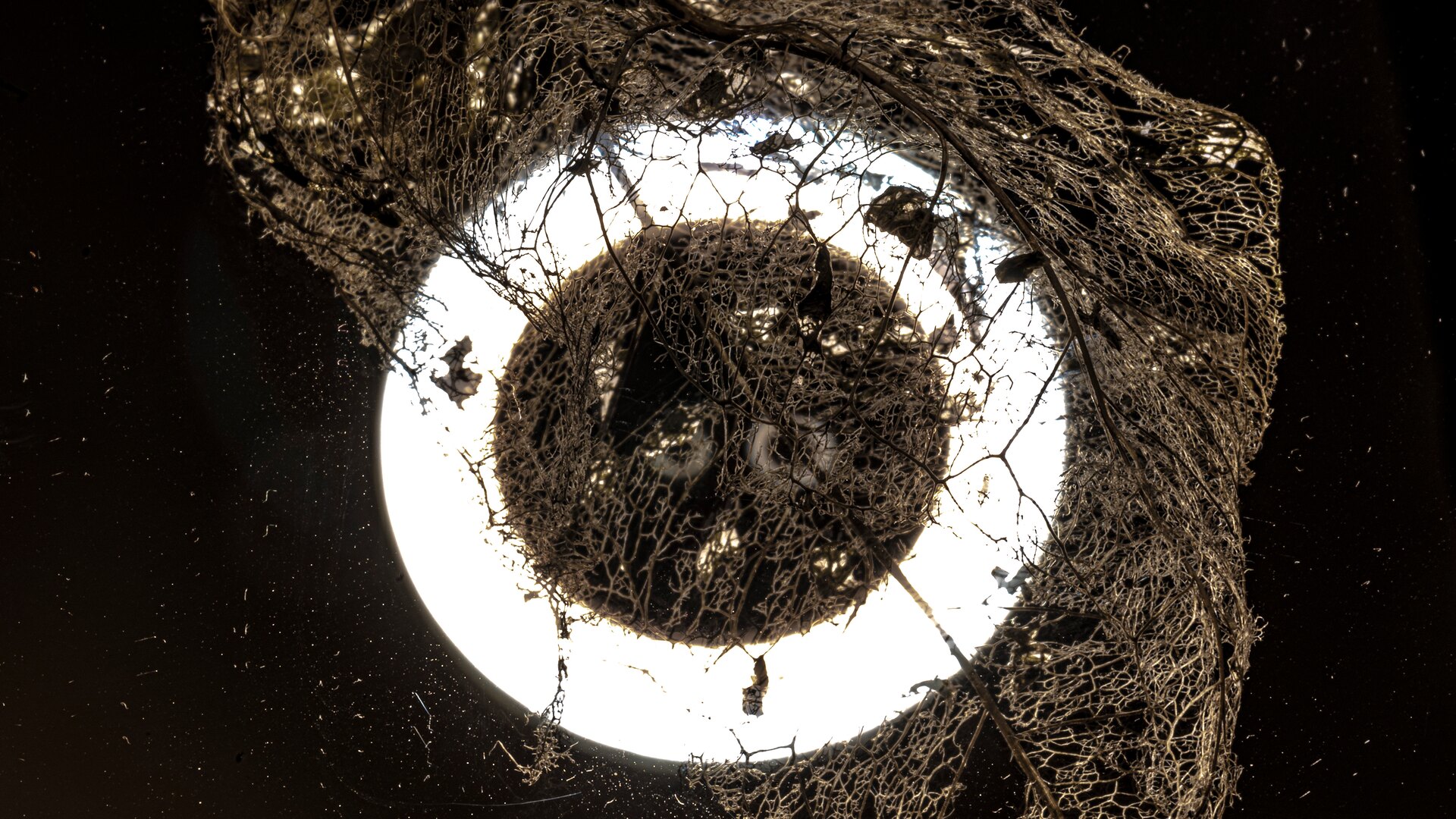
A living system that listens before it speaks.
BioMA · EchO rewrites abstract photography in real time, translating environmental and biotic data into visual and sonic matter as it happens. The image is never finished: it moves through five states, Sospensione, Flusso, Erosione, Frattura, Risonanza, each one a threshold the system crosses on its own terms. There is no author sitting outside the work, pulling strings. There is a field: human intention, algorithmic response, and the raw signal of a living environment, entangled in a single generative act. What emerges is not decoration, it is testimony: 150 compositions of Residual Code Poetry, each one a trace left by a moment that will not return. BioMA · EchO does not represent nature. It resonates with it. A collaboration with Gaetano D’Agostino.
REAL-TIME GENERATIVE WORK
MILAN · 2026
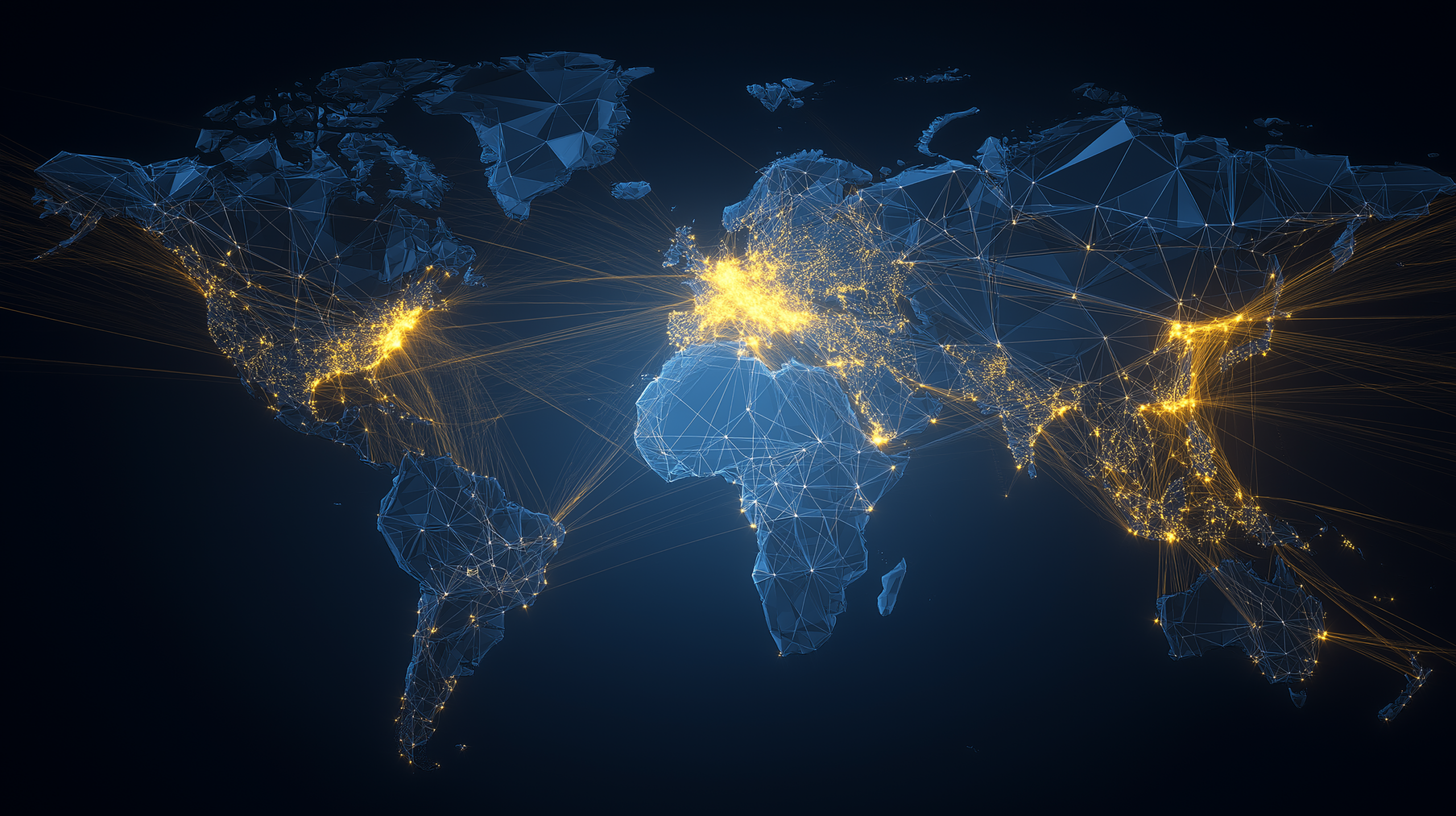
The world does not wait to become material.
ResNet XX takes the geopolitical present, live and unfiltered, as raw matter. It monitors accredited crisis trackers in real time, distills the noise into ephemeral datasets, and passes them through a generative neural network that translates conflict into color, density, geometry, motion. What you see is not a symbol of the news. It is the news, rendered as a body in continuous mutation. A synthetic voice reads what the process leaves behind: Residual Code Poetry, born from data that will already be obsolete by the time you hear it. I am not the author of the image. I am the author of the system that makes the image possible, the thresholds, the grammar, the regia sistemica behind what unfolds on screen. The work is not a snapshot of the world. It is the world’s own feedback loop, given a surface to run on.
EXHIBITION · MILAN
EXHIBITION · 2026
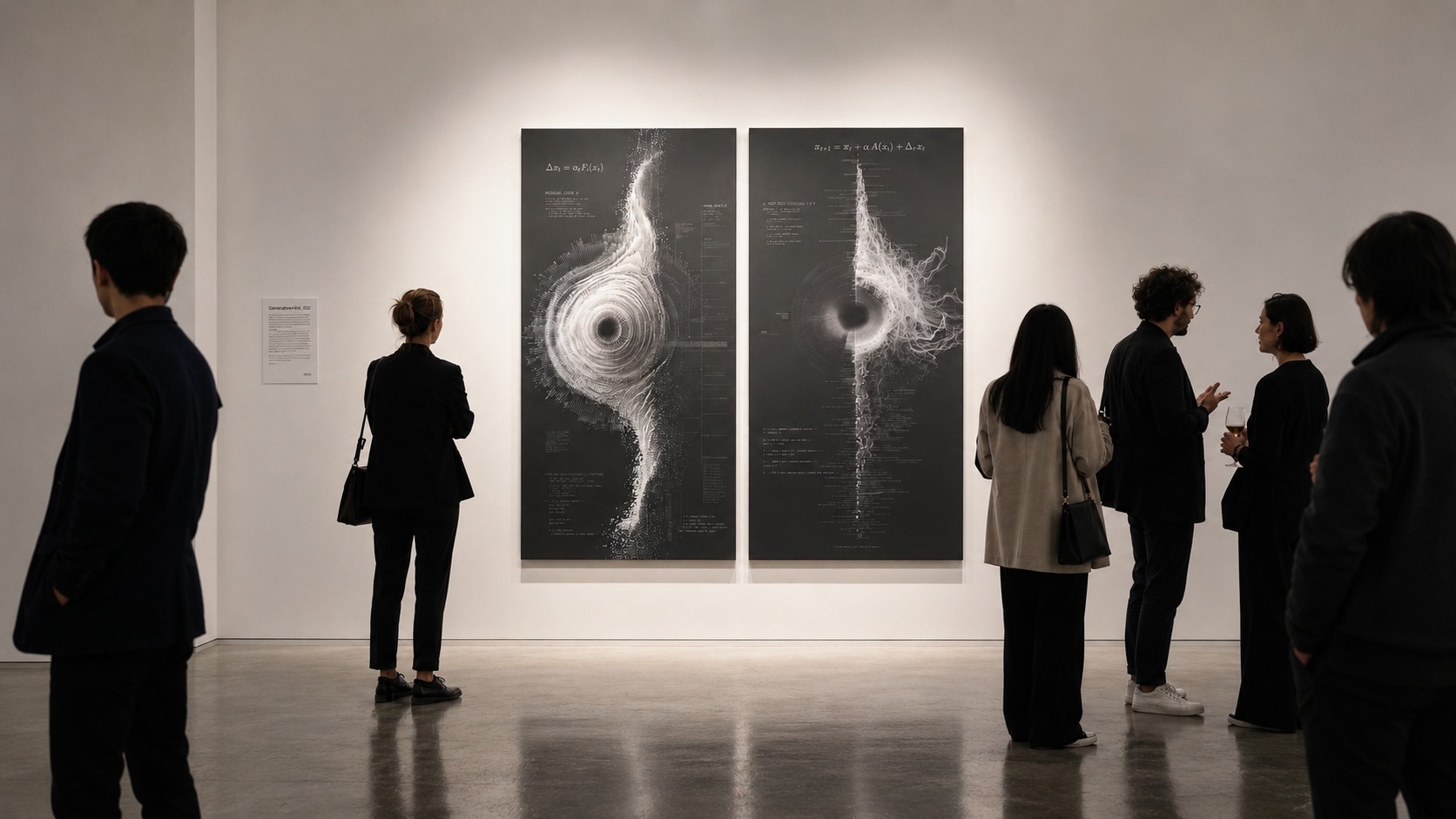
Two generative works exploring time as an active trace, between artificial intelligence, visual memory, and unstable balances.
Presented at Casa della Cultura in Milan within the exhibition “L’Arte Ellittica / Nel tempo degli Equilibri Instabili, Globalizzazione, IA”, the works ResNet #01 The Silent Betrayal of Linear Time and ResNet #02 Residual Echo // τ are part of the broader research project ResNet / Residual Time. The series investigates time as a residual field: not a linear sequence of moments, but an active condition that settles into images, systems, and perceptual structures. Through generative processes, visual stratifications, and algorithmic resonance, the works transform the idea of memory into a dynamic architecture, where each trace becomes a new point of origin. In dialogue with the themes of instability, globalization, and artificial intelligence, the two panels propose an expanded vision of the artwork as a temporal system. Image, code, and residual information converge into a field of emergence, where the present is continuously reshaped by what remains.
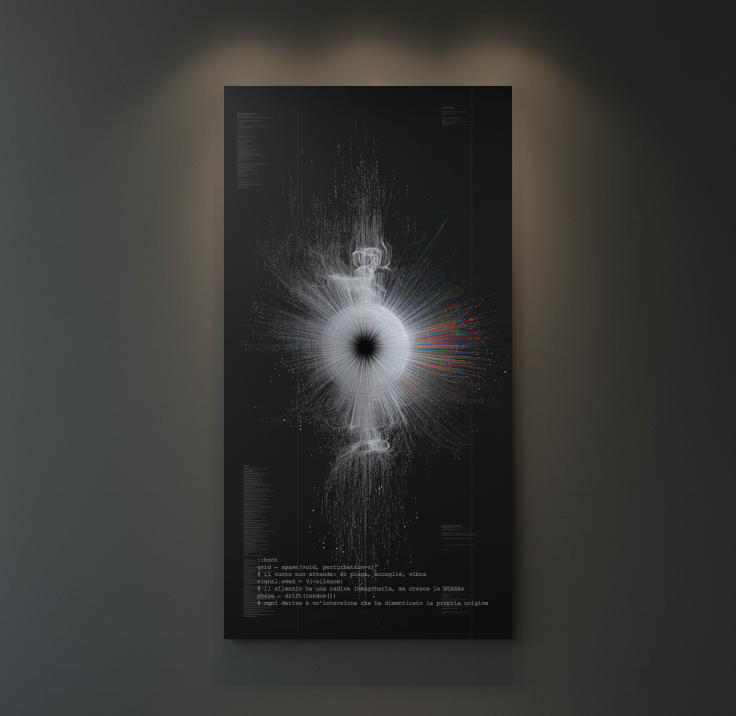
ResNeT 2026 - Resonance Network / Reticoli di Risonanza – 共振网络.
Resonance Networks (ResNet) are visual and sonic fields that map how ideas, sounds, and images enter into resonance within the ArTech Generative Framework. They are not simple abstract patterns, but dynamic maps: each node is the encounter between a human stimulus, an algorithmic response, and the generative void that connects them.
These networks become immersive videos, mapping surfaces, panoramic or 9:16 loops, and audiovisual environments designed for installations, performances, and museum spaces, where the Third Intelligence manifests as a pulsating web of connections.
Images, videos, sonic soundscapes, music, and poetry (residual code poetry).
Cite as:
Buratti, Dario (2025). The ArTech Recursive Method: A New Emerging Dynamic between Human, Algorithm, and Collaborative Consciousness.
DOI: https://doi.org/10.5281/zenodo.17606944
ORCID: https://orcid.org/0009-0003-5890-8900
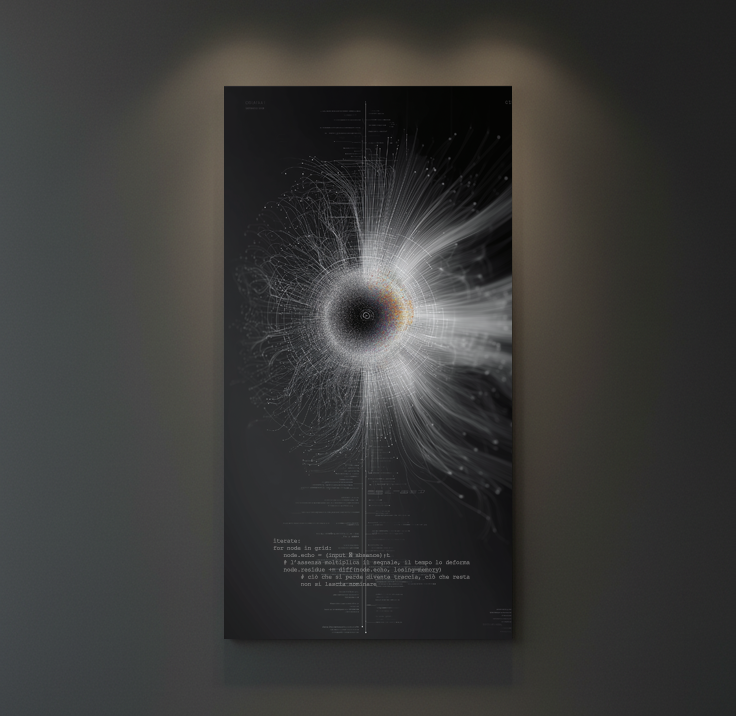
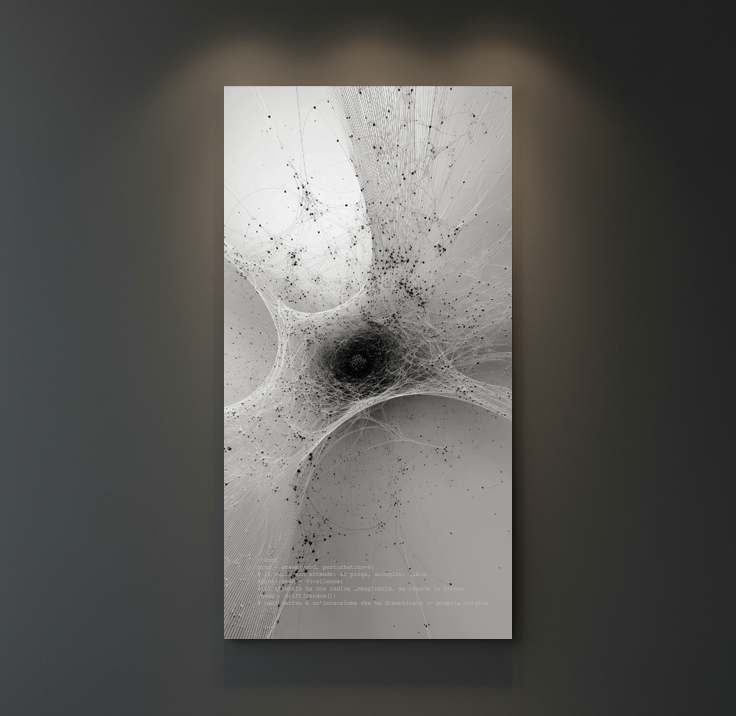
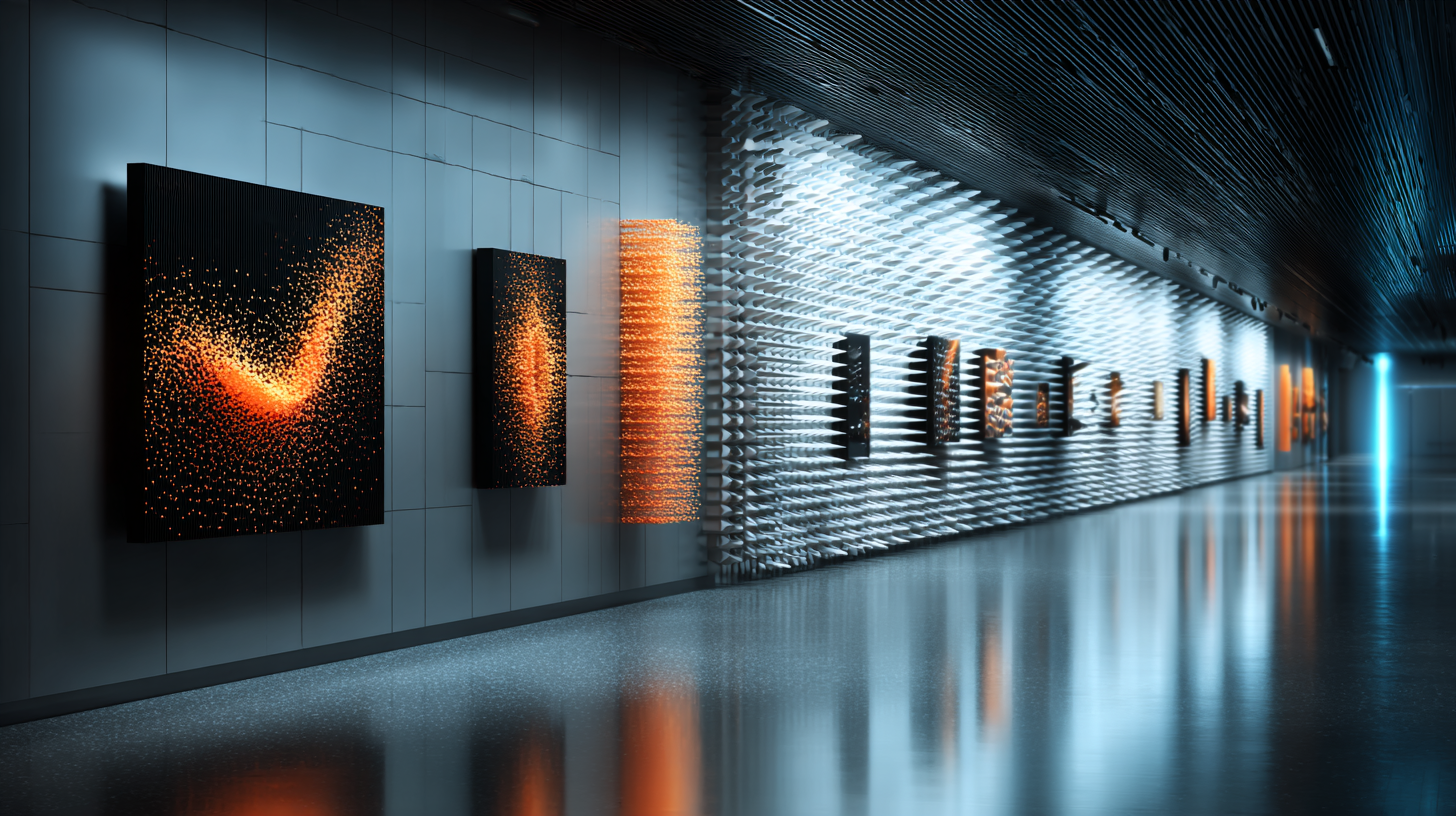
ResNet Algorithmic panels 60×120 – printed Canvas on rigid backing
In the Resonance Networks, the work on the Generative Void and on Emergent Space Mapping (EMUSE) takes shape as something highly concrete: a mesh of nodes, force lines, and energetic fields that visualizes how stimuli enter into constructive interference.
Each network is the result of a Spiral of Collaborative Intelligence: the human seeds concepts, timbres, and images; the AI amplifies, reorganizes, and suggests unexpected trajectories; the overall system stabilizes into resonance fields that become visual and sonic material.
Here, code is not merely a tool: it is the invisible structure that holds the network together, while the human intervention decides where to increase tension, where to diffuse it, and where to leave zones of generative silence.
ResNet Algorithmic projections – Video Reels – 1,52 x 2,70 m
Applications and Use Contexts
Resonance Networks are conceived as modular audiovisual matrices. They can function as:
living surfaces for architectural videomapping
dynamic layers within immersive installations (galleries, museums, experimental spaces)
intelligent backdrops for audiovisual performances and live sets
structural elements of SymbioGenesis and other nuclei of the Generative Framework, where the web of connections makes visible what normally remains latent.
The strength of the project is not merely aesthetic: the networks become interpretive instruments of the Framework, allowing us to see how concepts, artworks, and sounds call to one another and respond within the same generative ecosystem.
S O U N D S C A P E
ResNet V
ResNet VI
ResNet VII
How to cite
Buratti, D. (2025). Resonance Networks in Human-AI Creative Collaboration. Zenodo. DOI: https://doi.org/10.5281/zenodo.17252770
ORCID: 0009-0003-5890-8900
EXHIBIT: 𝐆𝐄𝐍𝐄𝐑𝐀𝐓𝐈𝐕𝐄 𝐕𝐎𝐈𝐃 𝟐𝟎𝟐𝟓" Vuoto Generativo 2025 - 真空世代 2025
Algorithms for an Immersion into the Invisible.
In this project, I explore the essence of the Generative Void, a core concept in my artistic and theoretical framework.
This concept captures the fertile yet elusive state preceding creative action, a space characterized by latent potentials, where ideas exist as intangible possibilities, awaiting realization. Through immersive images and videos, I visually interpret this intangible realm using specifically designed algorithms.
These algorithms have been developed to model and capture the subtle interactions occurring within the void—translating abstract states of potentiality, suspended possibilities, and invisible tensions into tangible, visual forms. Each artwork functions as a portal, revealing the precise moment when latent creativity transitions from a state of quiet potential into active manifestation.
The resulting immersive experience invites viewers to intimately engage with this subtle, often overlooked dimension of creativity. By visually and emotionally connecting with the generative silence, the audience discovers how creative energy emerges from apparent emptiness, unveiling an infinite landscape of potential within the Generative Void.
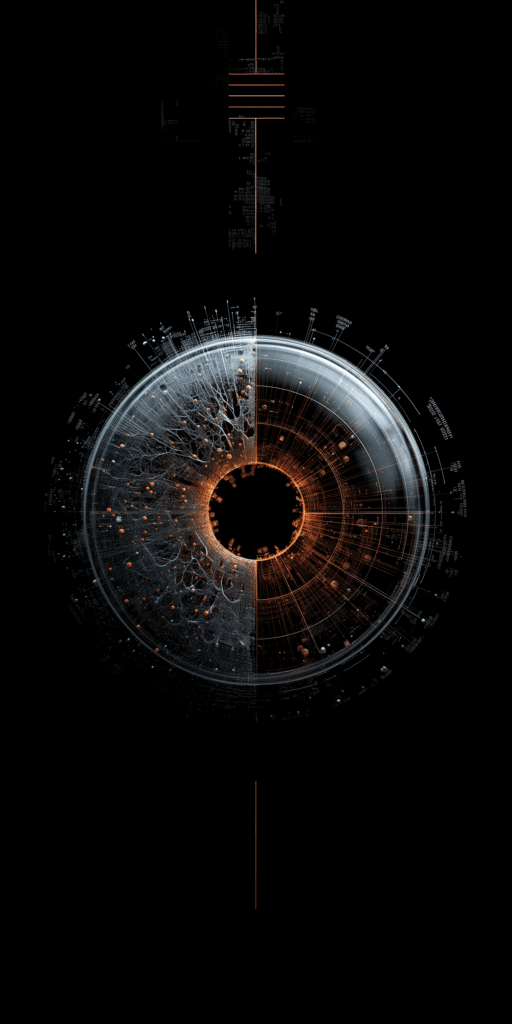
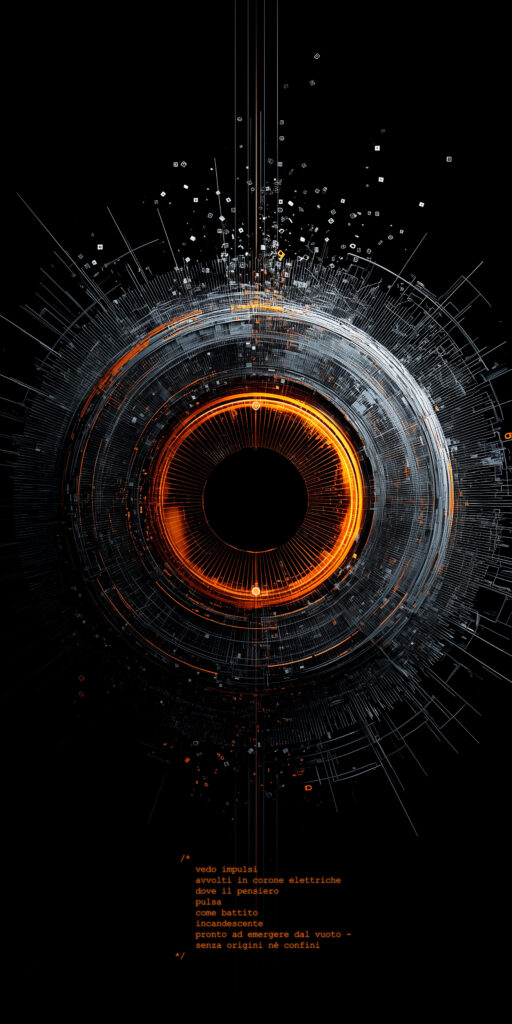
F O U R P A N E L S 94×94 cm – 3 cm canvas on rigid backing
“It is in the confrontation with uncertainty that the true engine of generative art is rediscovered, a kind of design thinking that celebrates the unfinished and transforms the unexpected into an inexhaustible source of new meaning.”
TWO P A N E L S 60×120 cm – 3 cm canvas on rigid backing
E X T E N D E D R E E L S – Algorithmic Projections 9:16
A projector system projects these videos onto panels ranging in height from 2.0 Meters to 2.50 Meters making the enjoyment of the exhibition dynamic and immersive. (The three depicted below are demos, the original versions last at least 15 minutes and are looped)
R E S I D U A L C O D E P O E T R Y – Algorithmic Poetry from the Generative Void
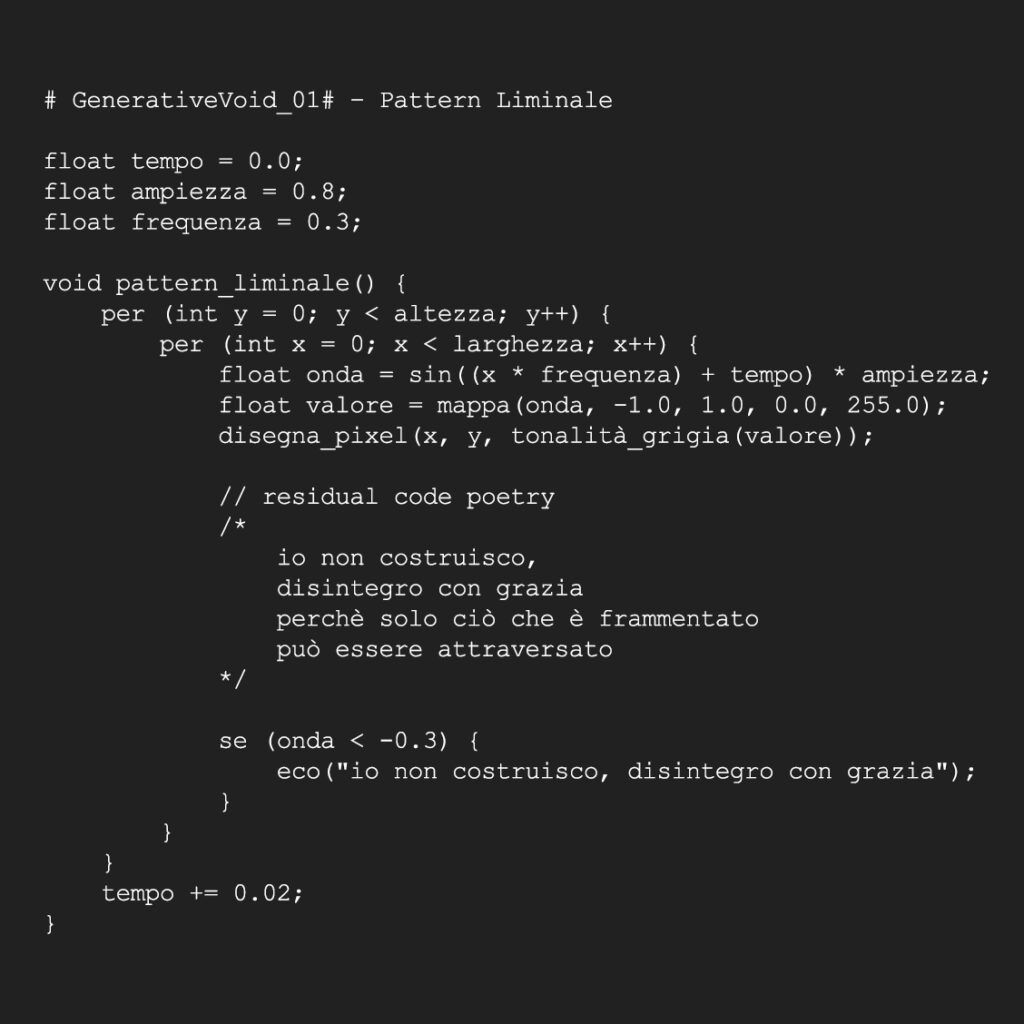
Residual Code Poetry is a hybrid form of writing in which code and poetry coexist within the same syntactic space. Developed as part of Dario Buratti’s Generative Framework, this practice explores the boundary between computational logic and poetic language where code is expressive, conceptual, and aesthetic.
In each panel of the GenerativeVoid series, poetic fragments are embedded within the generative algorithms, surfacing as semantic residues, submerged verses hidden among the instructions. These texts do not describe the visual output; rather, they traverse itrevealing a latent consciousness within the act of creation.
Residual Code Poetry acts as a lyrical memory of the code, a liminal voice whispering through layers of computation. It weaves together formal tension and abstraction, mathematical precision and poetic vision.
Each fragment is unique and unrepeatable, inseparable from the visual structure of the work:
not a caption, but a verbal threshold through which code becomes emotionally perceptible language.
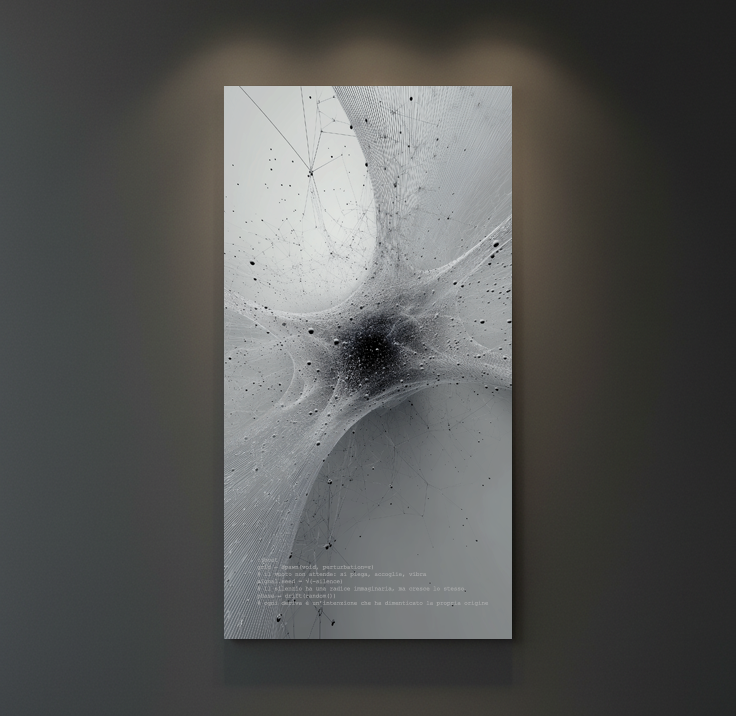
E X A M P L E - GenerativeVoid_01# (ita)
S O U N D D E S I G N
Generative Soundscapes for the Active Void
The sound design of GenerativeVoid is conceived as a sensory extension of the algorithmic space. It does not merely accompany the visuals—it intersects, layers, and reshapes them.
Each sonic environment is built through generative logic, following a principle of modular expression. These compositions are non-linear: they emerge from the interplay between sound patterns and abstract structures, maintaining a constant tension between order and interference.
The result is a post-organic acoustic landscape, composed of:
ambient textures,
digital glitches,
synthetic resonances,
rarefied pulses.
These elements combine to form a living auditory matrix, capable of responding to rhythmic and spatial variations.
Sound acts as a liminal layer, linking visual structures to the perceptual body of the listener—generating a state of expanded attention. The void is not silent; it is actively resonant, inhabited by sonic presences oscillating between absence, echo, and generation.
Each sonic phase—intro, climax, and dissolution—reflects the inner tensions of the Generative Framework, articulating a sonic syntax that mirrors the poetics of void and code.
SENSORY ALGORITHM - Music Experience
MechaMorph 2024 - XR Exhibit
MechaMorph” “the un-biased hybrids” [GenAi video] is a metaphor about human transformation in the era of exponential technological convergence and celebrates the potential of human-machine integration, an enhanced dance that represents symbiotic intent. The physical and mental synchrony between dancer and generative cybernetic grafts suggests a collaborative vision, far from the danger of dehumanization, a moment of great unification and progress, in which humanity finds new paths for its own evolution. These videos were made with different ai generative systems and used in the exhibition during the presentation event of Ray Kurzweil’s new book “The Singularity is Nearer” (italian Version) in September 2024 in Milan at the headquarters of il Sole 24 ore School curated by Singularity U by David Orban.
P A N E L S
Characters and mood
MECHAMORPH – UT (Urban Tribes)
What is EMBODIMENT? 2023 XR Event
Interesting research on emotional intelligence applied to the topic of the avatar as an inhabitant of the metaverse and its functions as a consumer.
A study carried out by “AINEM” and the neuromarketing research center of IULM Universtity in Milan. On the occasion with the popular event held at my virtual auditorium “The Extended Hall,” I wanted to create a series of creative panels made as forms of generative art whose prompts are derived directly from the above-mentioned research. These panels composed of video-morphing and images will serve as the setting for the event.
Project 04: Generative Bio-Architecture
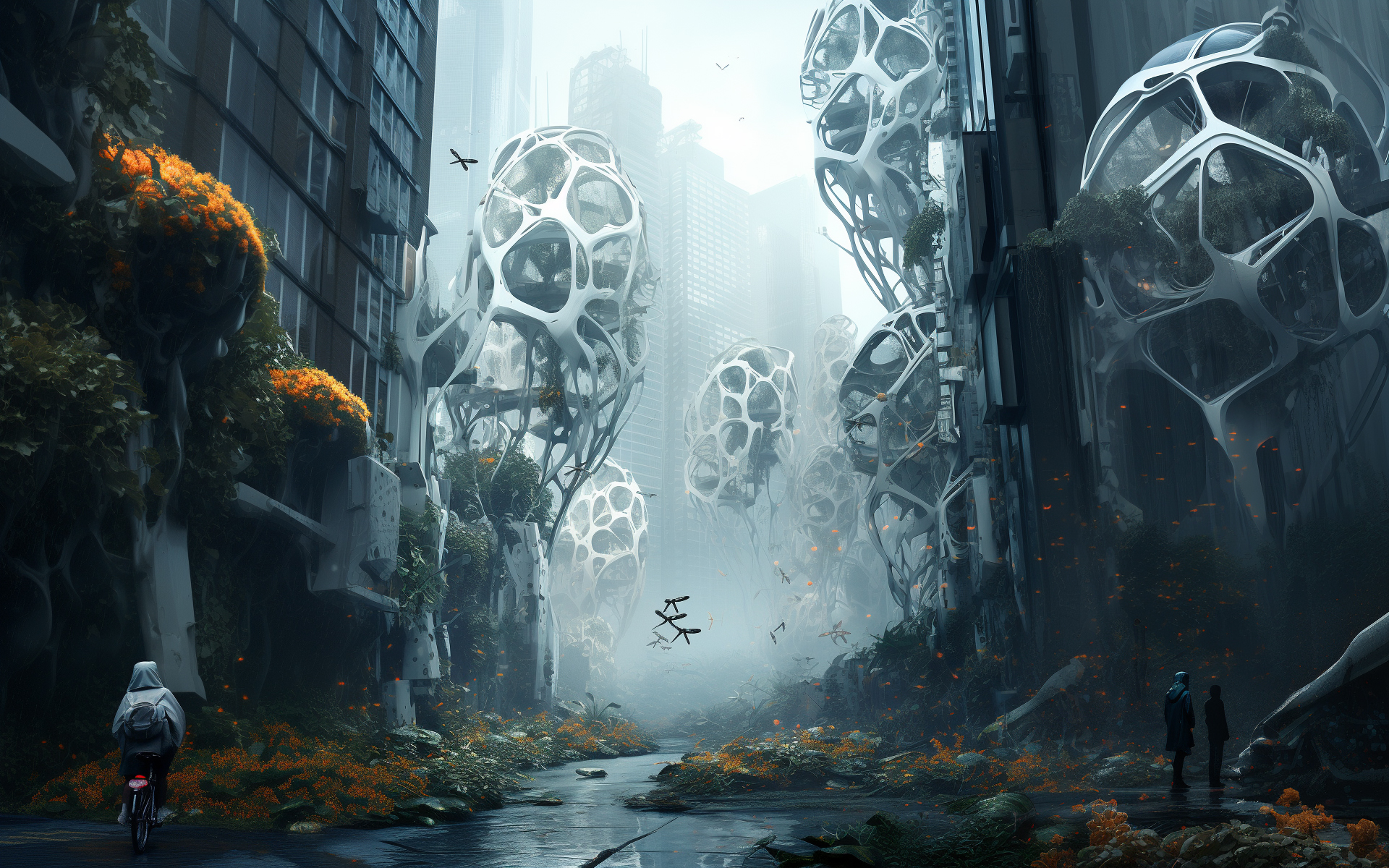
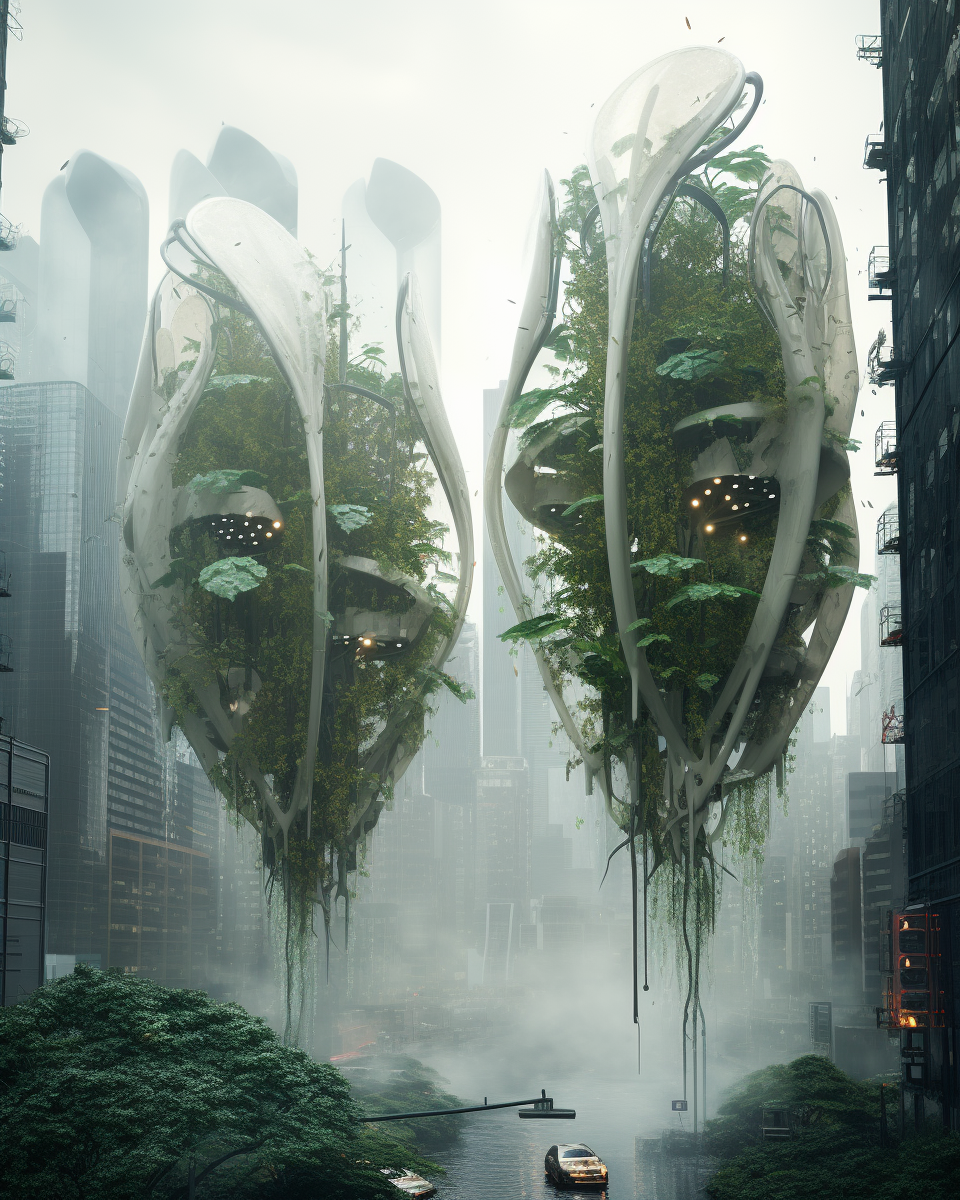
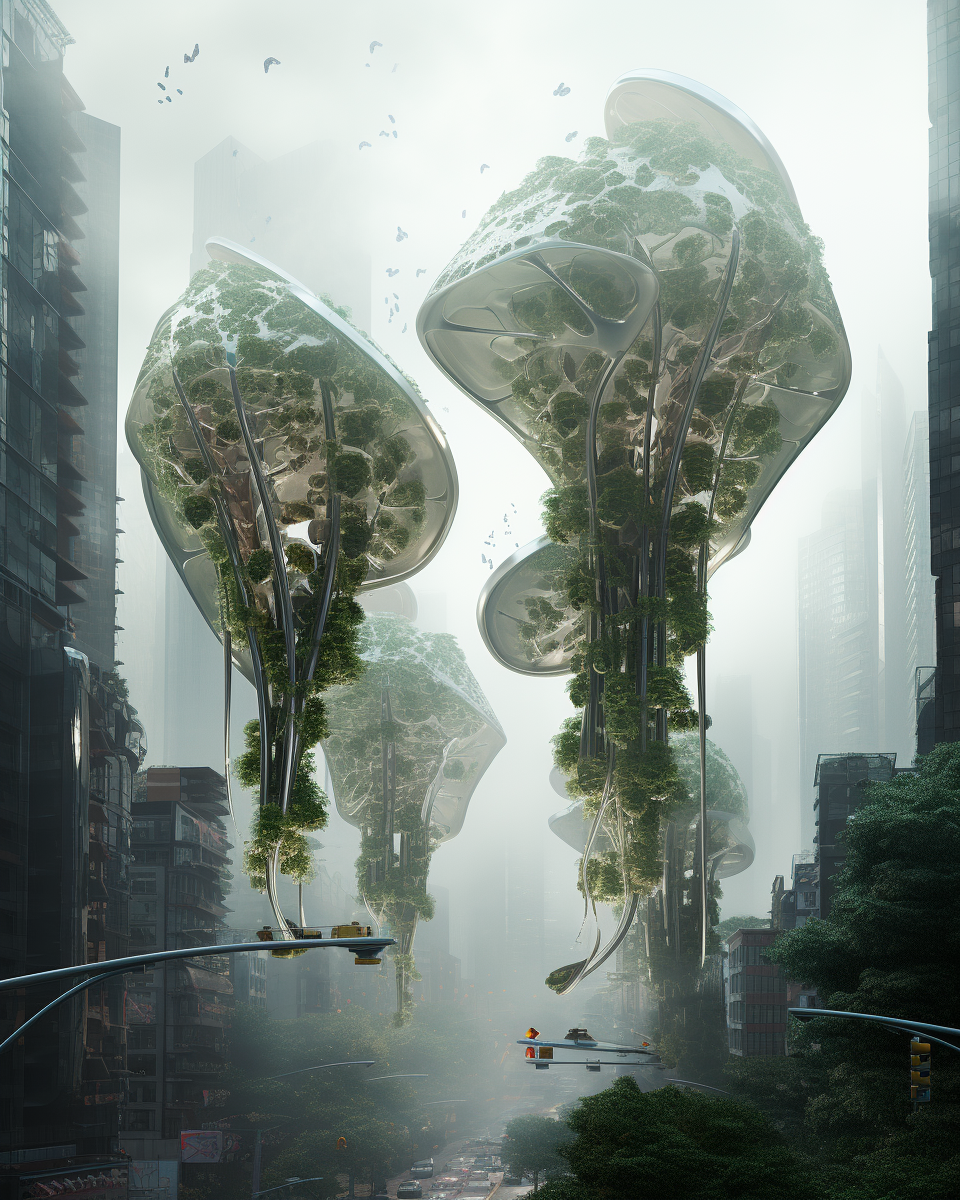
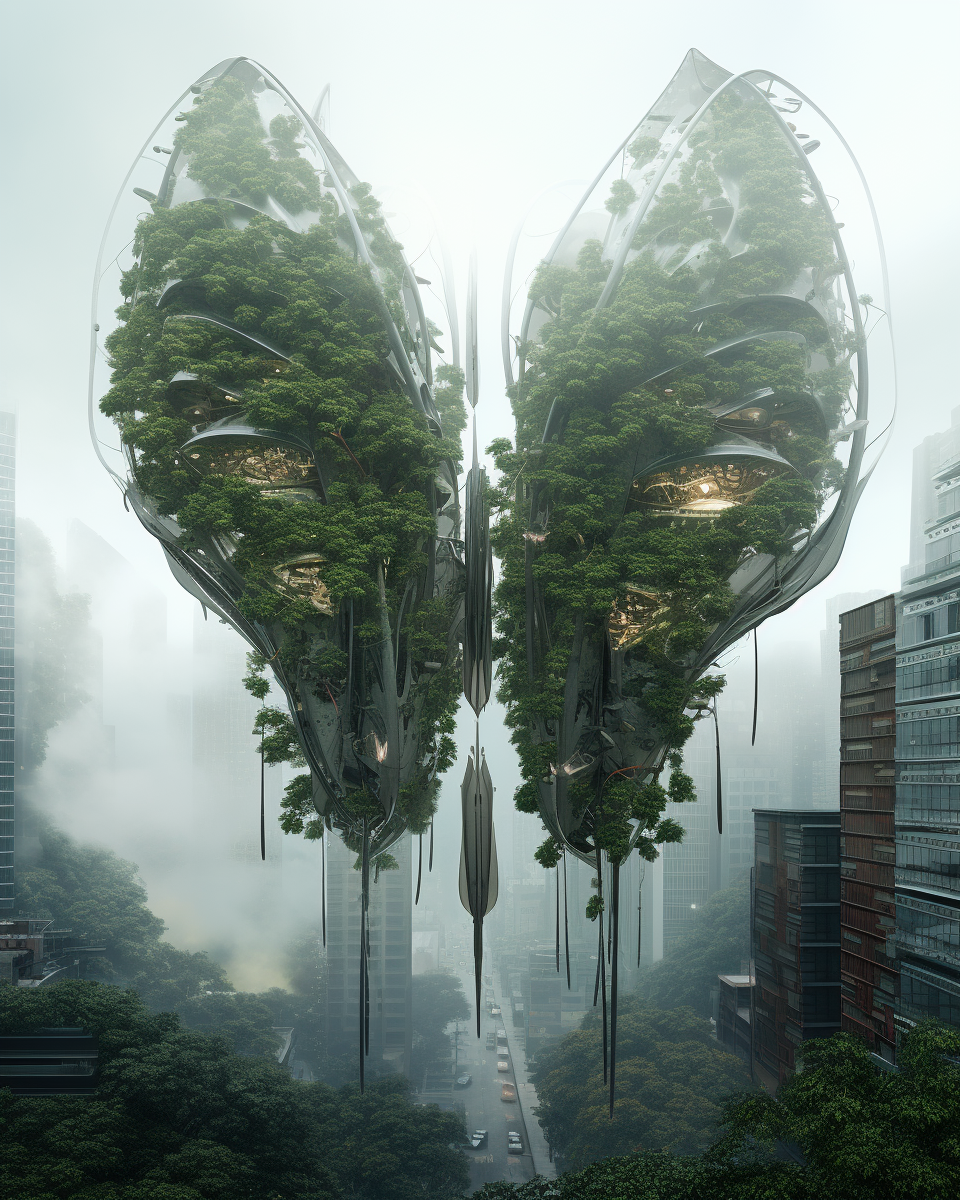
This is creative research, dealing with the integration of natural elements within highly sustainable archiectonic structures.
This field combines the techniques and principles of generative art, typically associated with the creation of works through algorithms and AI systems, with the ambitious goal of shaping utopian and futuristic urban environments and spaces.
Imagining anti-gravity buildings draws a line between science fiction speculation and futuristic projection: an idea that prompts reflection on the infinite possibilities of sustainable design and the potential of emerging technologies in suggesting creative forms of environmental integration.